







By Diane O’Brien, Chief Marketing Officer at Digital Marketing All
Google is changing how people discover websites. And this time, the opportunity isn't just about getting your website to appear in a list of blue links. It's about getting your business in front of someone at the exact moment they want to learn more, compare their options, or make a buying decision.
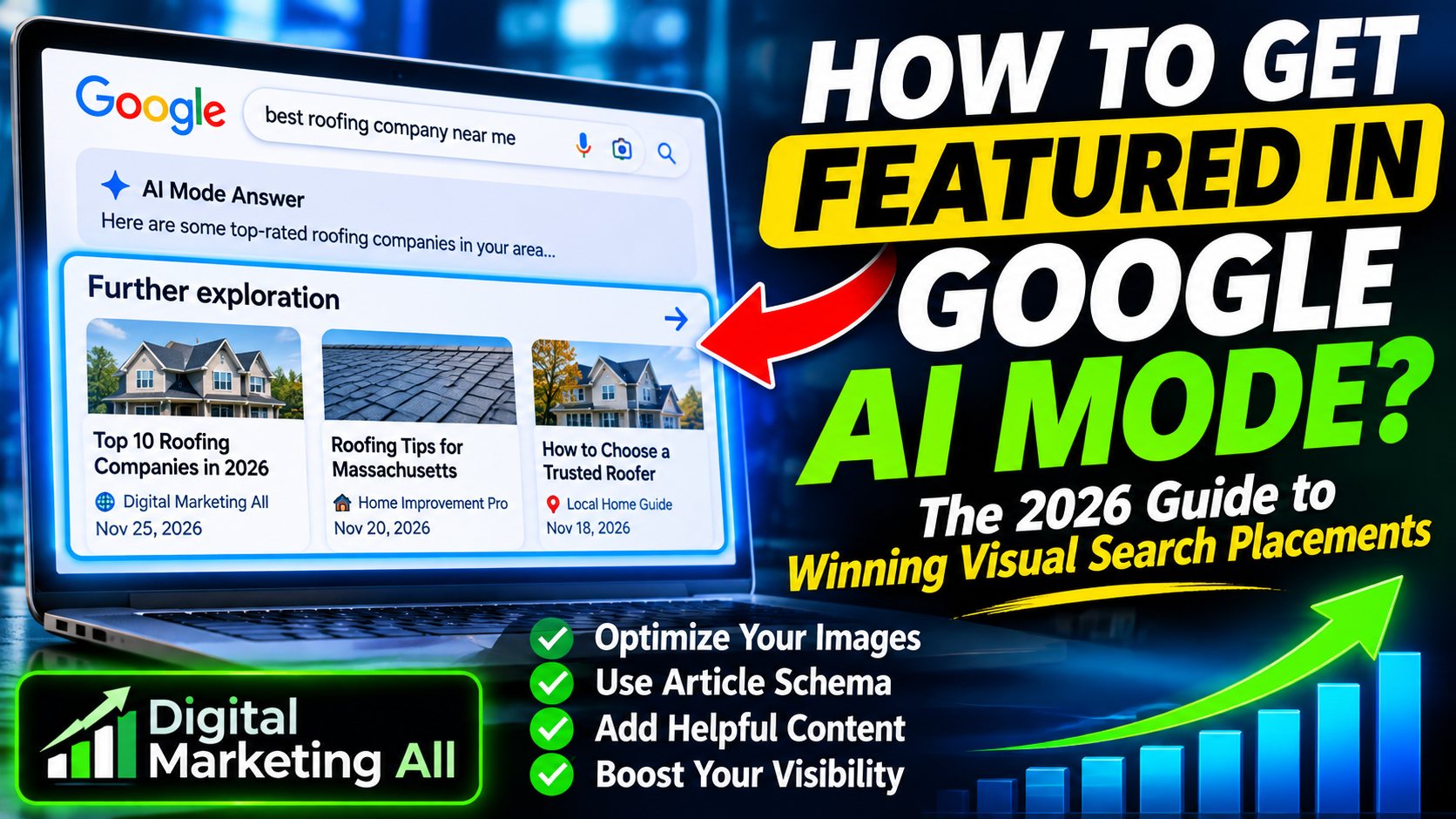
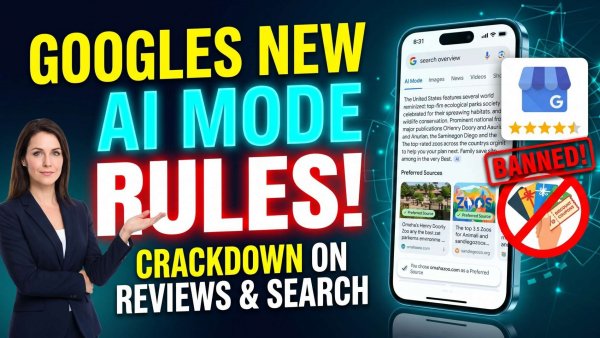
In October 2026, Google was testing something that deserves every business owner's attention: a new section in AI Mode called Further exploration. Instead of simply mentioning websites inside an AI-generated answer, this feature presents organic website links with descriptions, images, and dates.
Think about what that means. A potential customer asks Google a question. Google provides an AI-generated answer. Then, directly below that answer, it may show additional websites with visual previews that invite the customer to explore further.
The website that earns one of those placements gets another opportunity to win the click.
But here's the important part: you cannot simply upload a pretty picture and expect Google to feature your website. You need a page that Google can discover, understand, trust, and confidently present to the person searching.
For business owners, this is where traditional SEO, Answer Engine Optimization (AEO), Generative Engine Optimization (GEO), and smart visual content strategy come together.
Key Takeaways
Google is testing a new Further exploration section in AI Mode that displays organic website links with descriptions, thumbnail images, and dates.
Google has not published a special ranking formula or application process for these cards.
Your website must be crawlable, indexable, and eligible to appear in Google Search.
Original, relevant, high-quality images can help Google understand and visually represent your content.
Open Graph metadata and Article structured data help communicate your preferred article image.
Accurate publication and modification dates help Google understand when content was created and updated.
Clear answers, useful headings, original research, and strong internal links improve content quality and discoverability.
Local businesses can use these strategies to strengthen their visibility in traditional and AI-powered search.
The goal isn't simply to get a visual placement. It's to turn the resulting attention into qualified leads and paying customers.
What Is Google AI Mode's Further Exploration Section?
Google AI Mode's Further exploration section is a tested presentation of organic website links that helps people continue researching a topic. Each card can include a website link, short description, thumbnail image, and date, giving pages another path to discovery.
Google's AI Mode is designed to help people explore questions that may require several searches. Rather than simply returning a traditional list of search results, it can organize information from multiple sources and provide links to websites that support or expand its answers.
On October 26, 2026, Search Engine Watch reported seeing the Further exploration section in Google AI Mode.
The reported layout included:
A clickable website name.
A short descriptive line.
A thumbnail image on the right.
A date displayed beneath the listing.
One important detail remains unknown: the exact meaning of the date. It could represent the original publication date, the last updated date, or another date associated with Google's systems. Google has not publicly confirmed the date's source for this specific test.
This is why businesses should avoid assuming that a particular technical change guarantees a card placement.
The better strategy is to prepare your website to provide accurate information, clear descriptions, strong imagery, and reliable content dates.
Why Should Business Owners Pay Attention?
Let's look at how the customer journey is changing.
A homeowner might ask:
"Who are the best roofers near me, and how do I know which one to trust?"
Google AI Mode can research the question, compare information, and present an answer with links to supporting websites.
The homeowner may then see additional websites in a Further exploration section.
That creates another opportunity for a roofing company to earn attention.
The customer might not have searched for the company's name. They may never have seen its traditional organic listing. Yet a helpful article, strong local presence, and useful supporting information could make the company a relevant source.
This is the opportunity businesses need to prepare for.
What Changed in Google's AI Search Experience in October 2026?
Google announced several changes to AI Mode and AI Overviews on October 15, 2026.
The announcement, titled "More Ways to Connect with the Web from Search," described improvements intended to help people find and explore original websites more easily.
The changes included:
More inline links within AI-generated answers.
Links appearing higher in responses more frequently.
More prominent related links with visual elements.
Tests of dedicated sections highlighting official websites.
Expanded visual discovery experiences and creator profiles.
The important takeaway is that Google is working to make the connection between AI answers and original websites more visible.
This is good news for businesses that publish useful information.
However, there is a difference between being mentioned in an AI answer and earning a prominent organic link.
A mention can establish awareness. A clickable website card gives the customer a direct path to your website.
Both have value, but they serve different purposes.
Three Search Statistics That Explain the Opportunity
The shift toward AI-powered search makes it more important to measure visibility in new ways.
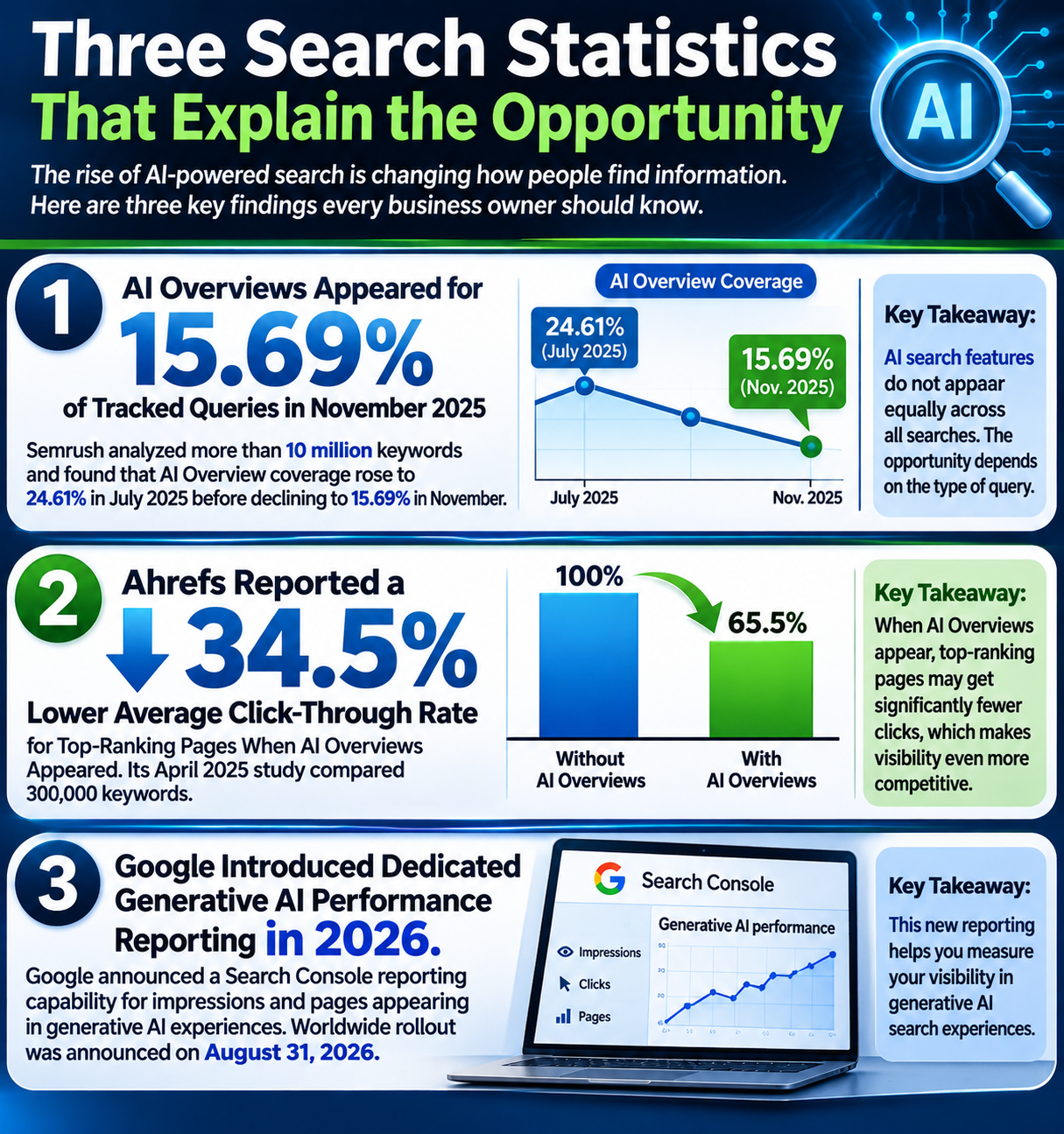
Consider these findings:
1. AI Overviews appeared for 15.69% of tracked queries in November 2025.
Semrush analyzed more than 10 million keywords and found that AI Overview coverage rose to 24.61% in July 2025 before declining to 15.69% in November.
This shows that AI search features do not appear equally across all searches. The opportunity depends on the type of query and the information Google believes will help the user.
2. Ahrefs reported a 34.5% lower average click-through rate for top-ranking pages when AI Overviews appeared.
Its April 2025 study compared 300,000 keywords. This finding highlights why simply ranking first may no longer tell the whole story.
3. Google introduced dedicated generative AI performance reporting in 2026.
Google announced a Search Console reporting capability for impressions and pages appearing in generative AI experiences. Google announced worldwide rollout on August 31, 2026.
That matters because marketers need better ways to measure AI visibility rather than relying only on traditional keyword rankings.
These statistics come from different studies and measurement systems. They should not be combined into a single prediction of traffic loss or business performance.
The business lesson is straightforward: track where your visibility comes from, what people do after finding you, and how many become customers.
How Does Google Choose the Thumbnail Image for a Website?
This is one of the most important parts of the new opportunity.
A thumbnail is not just decoration. It helps communicate what a page is about before someone clicks.
When Google displays a visual preview, the image can influence whether a person decides to explore the website.
But there is something business owners need to understand.
Google selects images automatically. Website owners can provide preferred images and supporting metadata, but Google decides what to display.
Google's official Image SEO documentation explains that it can use multiple sources when selecting images, including structured data and the Open Graph image metadata.
Here are the elements worth implementing.
1. Create an Original Featured Image
Every important article should have a relevant featured image.
Avoid using the same generic stock photo on every blog post.
For example, if your article explains how to improve Google AI search visibility, the image should show something related to AI search, website discovery, or visual search results.
A strong image should:
Match the subject of the article.
Be original whenever possible.
Communicate the topic quickly.
Have a clear focal point.
Be high resolution.
Avoid unnecessary text.
Avoid extreme aspect ratios.
A screenshot, original diagram, product photograph, or carefully designed illustration may be more useful than a generic photograph.
The image should support the information on the page, not simply make the page look attractive.
2. Use the Open Graph Image Tag
Open Graph metadata helps communicate how a webpage should appear when shared on social platforms and other services that use this information.
The most important image property is:
og:image
Example:
<meta property="og:image"
content="https://example.com/images/google-ai-mode-further-exploration.jpg">
You should also provide the page title and description:
<meta property="og:title"
content="How to Get Featured in Google AI Mode"> <meta property="og:description"
content="Learn how to optimize your website images, article structure, and metadata for Google's evolving AI search experience."> <meta property="og:type" content="article"> <meta property="og:url"
content="https://example.com/google-ai-mode-guide">
These tags help communicate your preferred page presentation.
They do not guarantee that Google will use the exact image or description.
3. Add Article Structured Data
Structured data gives search engines additional information about the content of your webpage.
For a blog article, the BlogPosting type is appropriate.
It can identify:
The article headline.
The author.
The publication date.
The last modification date.
The featured image.
The main article URL.
The publisher.
A particularly important property is image.
Google recommends using representative images that are accessible to its crawlers.
For best results, Google recommends providing multiple high-resolution image versions in 16:9, 4:3, and 1:1 aspect ratios.
Here is an example:
{ "@context": "https://schema.org", "@type": "BlogPosting", "headline": "How to Get Featured in Google AI Mode", "description": "A practical guide to optimizing website content and images for Google AI Mode.", "image": [ "https://example.com/images/article-16x9.jpg", "https://example.com/images/article-4x3.jpg", "https://example.com/images/article-1x1.jpg" ], "datePublished": "2026-11-25T09:00:00-05:00", "dateModified": "2026-11-25T09:00:00-05:00", "author": { "@type": "Person", "name": "Diane O'Brien" }, "publisher": { "@type": "Organization", "name": "Digital Marketing All", "url": "https://digitalmarketingall.org" }, "mainEntityOfPage": { "@type": "WebPage", "@id": "https://example.com/google-ai-mode-guide" }
}
Replace the example image URLs and article URL with the actual published URLs.
Do not add structured data for information that is not visible or accurate on the page.
4. Make Your Images Easy to Find
An excellent image does no good if search engines cannot access it.
Check the following:
Use standard image formats supported by Google.
Avoid blocking important image files.
Make sure image URLs return successfully.
Use descriptive file names.
Provide meaningful alt text.
Use relevant surrounding text.
Include important images in your website's image discovery structure.
Make sure the image is available to Googlebot.
For example:
Poor file name:
IMG_8392.jpg
Better file name:
google-ai-mode-further-exploration-cards.jpg
Poor alt text:
image
Better alt text:
Google AI Mode Further exploration section displaying organic website links with thumbnail images
Alt text should describe what the image actually shows. It should not become a place to stuff keywords.
What Is the Difference Between SEO, AEO, and GEO for Visual AI Search?
Business owners often hear these three terms and assume they are interchangeable.
They are related, but they have different jobs.
Strategy |
Primary purpose |
Example |
|---|---|---|
Traditional SEO |
Help pages become discoverable in search engines |
Rank for roofing services in Lowell |
AEO |
Make information easy to understand and use as an answer |
Explain how to choose a qualified roofer |
GEO |
Improve a brand's visibility and potential inclusion in generative AI responses |
Become a relevant source in AI-generated roofing recommendations |
The strongest approach combines all three.
Traditional SEO helps establish discoverability.
AEO helps organize information around the questions customers ask.
GEO focuses on the wider digital presence, brand information, and authority that may help generative AI systems recognize and reference a business.
The Three Core Content Anchors for AI-Friendly Articles
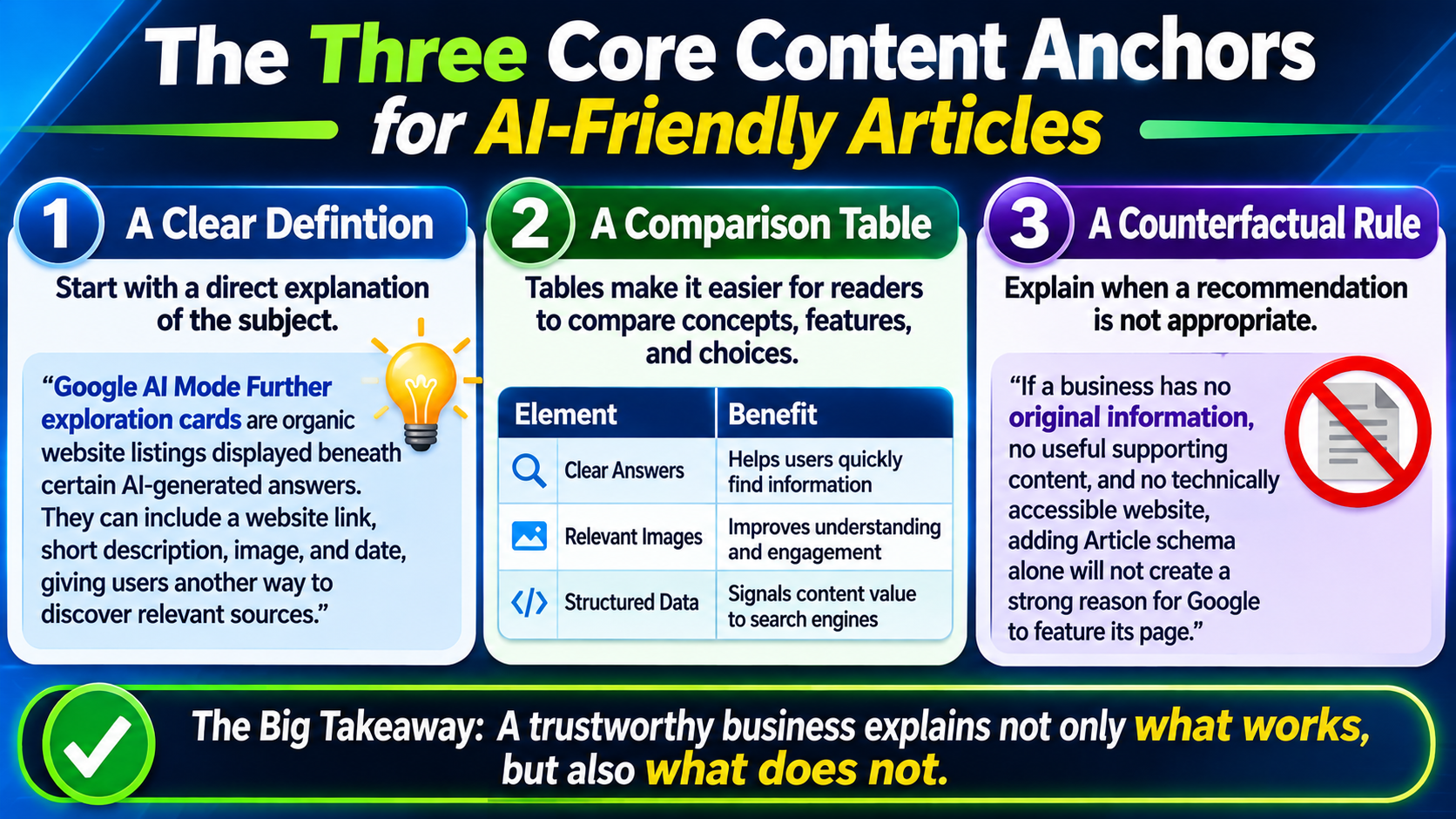
At Digital Marketing All, we recommend building important articles around three content elements.
Anchor 1: A clear definition.
Start with a direct explanation of the subject.
For example:
"Google AI Mode Further exploration cards are organic website listings displayed beneath certain AI-generated answers. They can include a website link, short description, image, and date, giving users another way to discover relevant sources."
Anchor 2: A comparison table.
Tables make it easier for readers to compare concepts, features, and choices.
They also give search systems clearly organized information.
Anchor 3: A counterfactual rule.
Explain when a recommendation is not appropriate.
For example:
"If a business has no original information, no useful supporting content, and no technically accessible website, adding Article schema alone will not create a strong reason for Google to feature its page."
This final point matters.
A trustworthy business explains not only what works, but also what does not.
How Do You Optimize an Article to Earn a Google AI Mode Placement?
Now let's turn the strategy into an actual process.
Step 1: Choose a Specific Customer Question
Do not begin with a broad keyword just because it has search volume.
Start with a question that someone might ask before buying.
For example:
How much does a roof replacement cost?
What should I look for when hiring a plumber?
How long does a kitchen renovation take?
What are the signs that my HVAC system needs replacement?
The article should answer the question clearly.
Then expand with supporting information that helps the reader make a decision.
Step 2: Put the Answer Near the Top
Do not make people read 1,000 words before they understand what the page is about.
Start with a short answer.
Then explain the details.
Use descriptive headings that match real questions.
For example:
What Does a Roof Replacement Cost in Massachusetts?
Follow it immediately with a direct answer that explains the factors affecting price.
This structure helps readers and makes the page easier to understand.
Step 3: Add Original Supporting Information
Generic content is everywhere.
A business needs to explain what makes its knowledge valuable.
A roofing company could include:
Its roof inspection process.
Common local roofing problems.
Material comparisons.
Photos of completed projects.
Real customer questions.
Verified project examples.
Maintenance advice.
A plumbing company could publish original explanations of common repair problems, photographs of its work, and clear descriptions of its service process.
Google's 2026 guidance emphasizes useful, original, non-commodity content.
The important lesson is to publish information that offers something beyond what every other website already says.
Step 4: Use Clear Publication and Modification Dates
Freshness matters when the subject changes.
If you publish an article on November 25, 2026, make sure the visible date and structured data accurately reflect that publication.
When you make a meaningful update, update the modification date.
Do not change dates just to make an old article appear new.
A legitimate update should improve the article.
Examples include:
Adding new Google search developments.
Correcting an outdated statistic.
Updating technical instructions.
Adding new research.
Replacing broken links.
Adding new examples.
Use datePublished for the original publication date and dateModified for the latest meaningful modification.
Step 5: Connect Related Articles With Internal Links
Your website should not contain hundreds of disconnected blog posts.
Build topic clusters.
For example, an article about Google AI Mode could link to:
Your main guide to AI search optimization.
Your image SEO guide.
Your local SEO strategy.
Your Google Business Profile resources.
This helps readers discover related information and makes important pages easier for search engines to find.
Google specifically recommends making important content easy to find through internal links.
Step 6: Make Sure Google Can Crawl and Index the Page
This is where technical SEO becomes essential.
Check:
Robots.txt settings.
XML sitemap inclusion.
Canonical URL.
HTTP response status.
Indexing permissions.
Mobile usability.
Page loading performance.
Image accessibility.
Structured data validity.
Internal linking.
A page that cannot be indexed and shown with a Search snippet is not eligible to appear as a supporting link in Google's AI search experiences.
Google also makes clear that meeting the technical requirements does not guarantee indexing or placement.
Step 7: Measure What Happens After Publication
Publishing the article is only the beginning.
You need to know whether it is producing business value.
Measure:
Search impressions.
Organic clicks.
Search queries.
AI search impressions.
Pages appearing in generative AI experiences.
Referral traffic.
Calls.
Forms.
Qualified leads.
New customers.
Revenue.
The question should not simply be:
"Did we get traffic?"
It should be:
"Did this content help us acquire customers profitably?"
How Does Google AI Mode Affect Local SEO and the Map Pack?
This is where the opportunity becomes especially interesting for local businesses.
For years, local SEO focused heavily on getting a business into Google's local search results and the Google Maps 3-Pack.
That is still important.
But customers now have more ways to discover businesses.
A person may ask Google AI Mode:
"Who is the best HVAC company in Lowell, Massachusetts for a furnace replacement?"
That question involves several things:
The service being requested.
The customer's location.
Business relevance.
Trust and reputation.
Supporting website information.
Potential comparisons.
A business needs to be easy to understand across its entire online presence.
Build a Consistent Source of Truth
A source of truth is the reliable, authoritative collection of facts that defines a company.
It should establish:
Official business name.
Address and service area.
Phone number.
Website.
Services offered.
Business hours.
Credentials and licenses, where applicable.
Ownership and brand information.
Verified customer feedback.
Important business policies.
These details should be consistent across your website, Google Business Profile, Bing Places, and other trusted business listings.
Why does this matter?
Imagine that your website says you serve Lowell, but your other business listings show a different service area.
A customer may become confused.
Search systems may also encounter conflicting information.
Consistency makes your business easier to identify and understand.
Create Local Content That Answers Real Questions
A local business should not publish a page that simply repeats the same city name 20 times.
Instead, create content that demonstrates actual knowledge of the local market.
For example, a Massachusetts roofing company could publish:
How to prepare a roof for winter in Massachusetts.
What homeowners should know about ice dams.
How to compare asphalt and metal roofing.
When a roof inspection is recommended.
What affects roof replacement costs in Middlesex County.
Use real local experience and verified information.
Do not create fake local offices or pretend to have completed projects in towns where you have never worked.
Connect the Website to Google Business Profile
Your website and Google Business Profile should reinforce each other.
Your website should clearly explain what you do, where you work, and why customers should trust you.
Your profile should accurately reflect the business and its services.
Keep contact information, service categories, business hours, and other important details current.
Remember: there is no guarantee that a strong Google Business Profile will produce a Further exploration placement. These are different search experiences.
But a well-maintained local presence supports a stronger overall digital footprint.
Get Cited by AI (ChatGPT, Gemini, and Grok).
Being found in a traditional Google search is important.
But businesses also need to understand how customers discover companies through conversational AI.
Someone might ask ChatGPT:
"Who is a reliable plumber in my area?"
Another person might ask Gemini:
"What should I consider before hiring an electrician?"
Someone else might ask Grok:
"Which local marketing agency understands AI search?"
These systems may use different sources, search methods, and information retrieval processes.
There is no universal formula that guarantees a business will be cited.
However, there are practical ways to improve the quality and clarity of your digital presence.
Make Your Business Easy to Identify
Your website should have a clear identity.
Make it easy to determine:
Who owns the company.
What the company does.
Where it operates.
Which customers it serves.
What makes its services different.
How customers can contact it.
Your About page should provide real company information.
Your service pages should explain exactly what you offer.
Your author information should identify the people responsible for important content.
Your business facts should agree across trusted platforms.
Publish Content That Can Stand on Its Own
A useful article should make sense even if someone reads only one section.
For example:
What Is Image SEO?
Image SEO is the process of making website images easier for search engines to discover, understand, and display. It includes image quality, file accessibility, descriptive text, relevant page content, and appropriate image metadata.
This is a direct answer.
A reader does not need to understand the entire article to understand the definition.
This approach also makes your content easier to navigate.
Use Verifiable Facts
Avoid unsupported statements such as:
"We are the number one company in Massachusetts."
Instead, provide facts that can be checked.
Examples include:
Years in business, if verified.
Number of completed projects, if documented.
Service areas.
Actual professional credentials.
Real customer testimonials.
Published case studies.
Documented project results.
If you claim a customer saved money, explain how the savings were measured.
If you publish a statistic, identify its source.
Trust is built through evidence.
The Shortcut: Four Done-For-You Growth Systems From Digital Marketing All
Business owners have enough responsibilities already.
You should not have to become a technical SEO specialist, website developer, AI researcher, advertising manager, and lead-generation expert just to get more customers.
This is where Digital Marketing All can help.
Instead of treating every marketing activity as a separate project, we look at how the pieces work together to create measurable growth.
Here are four ways we can help.
1. Growbotik: Know What It Takes to Reach Your Monthly Customer Goal
Growbotik is a revenue growth planning system.
The idea is simple.
Tell us how many additional customers you want each month.
We develop a plan that shows what it would cost to work toward that goal.
Then we execute the plan, monitor the results, and adjust the strategy as the business grows.
For example, a contractor may want 15 additional customers every month.
We look at the business's current performance, target market, marketing channels, lead requirements, conversion rates, and available budget.
The result is a plan built around a specific customer acquisition goal rather than an arbitrary marketing budget.
We then monitor performance and make adjustments to help achieve the desired monthly customer growth.
2. Always On AI: Stop Losing Customers Because Nobody Answers the Phone
Always On AI helps businesses capture opportunities when their staff cannot immediately respond.
Think about how many potential customers call a business after hours.
Some businesses miss those calls.
Others take hours to respond to website inquiries.
By that time, the customer may have already hired a competitor.
Always On AI helps address this problem through:
24/7 AI phone answering.
Website chat that engages and qualifies visitors.
Automated follow-up on new web leads.
Appointment booking.
CRM synchronization.
Live call monitoring.
Human takeover when needed.
The goal is to make sure more marketing-generated opportunities receive attention.
Getting a website visitor is only part of the job. Converting that visitor into a customer is where the revenue is created.
3. Be Found Everywhere: Build a Stronger Digital Presence
Be Found Everywhere focuses on helping businesses strengthen their visibility across the digital channels where customers search.
Your customers are not all using the same platform.
Some use Google.
Some use Bing.
Some use social media.
Others ask AI tools for recommendations.
Your digital presence should make it easy for people to identify your company, understand your services, and find accurate information.
This includes:
Local SEO.
Website optimization.
Search visibility.
Business information consistency.
Content development.
AI search optimization.
Brand visibility.
The objective is to make your business easier to find and understand across multiple discovery channels.
4. Free Website Design: Give Your Marketing Somewhere to Convert
You can spend money driving people to your website, but what happens when they get there?
If your website is outdated, confusing, or difficult to use, you may be losing customers before they contact you.
We are offering free basic website designs to help businesses that do not have a website or need an updated online presence.
The purpose is to give businesses a better starting point for turning visitors into leads.
A website should explain what you do, establish trust, answer customer questions, and make it easy to take the next step.
Learn more about the free website design service.
The real shortcut is having these systems work together.
A customer discovers your business through search.
Your website answers the customer's questions.
Your marketing systems capture the inquiry.
Your follow-up process helps turn that inquiry into a sale.
And your revenue growth plan measures whether the investment is producing the customers you want.
That is what full-funnel digital marketing solutions should accomplish.
What Would This Look Like for Two Local Businesses?
Let's make the strategy easier to understand.
The following are illustrative business-planning scenarios, not actual client case studies or verified customer results. The numbers are sample assumptions designed to demonstrate how the process can be measured.
Story 1: A Roofing Company in Lowell, Massachusetts
A roofing company in Lowell wants to increase its number of qualified roof replacement inquiries.
The owner has a website, but the blog contains little useful information. Most of the service pages are short, and the company has few original photographs of its work.
The owner also struggles to respond to calls while crews are working.
The marketing strategy begins with the questions customers actually ask.
The company creates useful articles covering:
How much a roof replacement costs.
Signs a roof needs replacement.
What Massachusetts homeowners should know about ice dams.
How to compare roofing materials.
What happens during a roof inspection.
Each article includes original project photographs, descriptive headings, accurate information, relevant image metadata, and appropriate Article structured data.
The company also improves its local service pages and business information.
Now consider the conversion side.
The company establishes a planning target of 20 additional qualified inquiries per month.
For illustration, assume:
20 additional qualified inquiries.
40% become booked jobs.
8 additional jobs.
$9,000 average revenue per completed job.
The potential additional monthly revenue would be:
20 × 40% × $9,000 = $72,000.
That is a planning model, not a prediction or guaranteed result.
The company then uses its lead tracking and revenue growth plan to determine which marketing activities are producing the best customers.
If AI search begins sending qualified visitors to the website, those leads can be measured alongside traditional organic and paid traffic.
The important point is that the company is no longer measuring success only by website rankings.
It is measuring the entire path from discovery to revenue.
Story 2: A Plumbing Company in Nashua, New Hampshire
A plumbing company wants more emergency service calls.
Its website receives visitors, but the owner notices that many inquiries arrive when the office is closed.
Customers need help immediately. They are not likely to wait until the next morning.
The business begins improving its online presence.
It publishes helpful content explaining:
What to do when a pipe bursts.
Signs of a hidden plumbing leak.
When a water heater needs replacement.
What to look for when hiring an emergency plumber.
It adds original photographs and clear service information.
The website is structured so visitors can quickly understand the company's emergency services and service area.
The business also implements an automated response and lead capture system.
When a potential customer calls outside normal business hours, an AI Agent through Always On AI can answer and collect the information needed for the next step.
The owner establishes an illustrative goal of 15 additional qualified inquiries per month.
Assume:
15 additional qualified inquiries.
60% become completed jobs.
9 additional jobs.
$450 average completed job revenue.
Potential additional monthly revenue:
15 × 60% × $450 = $4,050.
Again, these are hypothetical planning figures, not actual customer results.
The company can then measure the cost of generating each inquiry, the number of booked appointments, completed jobs, and revenue.
The lesson from both examples is the same.
Getting discovered creates an opportunity. Having the right systems in place helps turn that opportunity into revenue.
How Do You Measure Whether Your Website Is Appearing in AI Search?
This is where many businesses make a mistake.
They spend money on SEO and AI optimization but do not establish a measurement process.
You need to know whether the strategy is working.
Use Google Search Console
Google Search Console is one of the most important tools for understanding how Google discovers and displays your website.
Monitor:
Impressions.
Clicks.
Search queries.
Pages receiving visibility.
Indexing issues.
Search performance over time.
Also examine the generative AI performance reporting available in Search Console.
Google's 2026 reporting development is especially useful because it provides dedicated visibility into pages and impressions associated with generative AI search experiences.
Track the Entire Customer Journey
Here is the measurement framework I recommend.
Measurement |
What it tells you |
|---|---|
AI search impressions |
Whether pages are being displayed |
Organic impressions |
Whether search visibility is growing |
Click-through rate |
Whether people are choosing your listing |
Website sessions |
Whether people are visiting |
Engagement |
Whether visitors are finding useful information |
Qualified inquiries |
Whether the traffic is relevant |
Booked appointments |
Whether leads are converting |
Completed sales |
Whether the marketing produces customers |
Revenue |
Whether the investment creates business value |
Calculate the Real Return on Investment
Here is a simple example.
Suppose a company invests $3,000 per month in marketing.
That marketing generates 30 qualified inquiries.
Ten become customers.
Each customer produces an average of $1,200 in revenue.
The resulting revenue is:
10 × $1,200 = $12,000.
The revenue-to-marketing-spend ratio is:
$12,000 ÷ $3,000 = 4.
That means the company generated $4 in revenue for every $1 spent on marketing.
However, revenue is not profit.
To calculate actual marketing ROI, the company must also account for the cost of delivering the service, overhead, and other relevant expenses.
A business should never confuse a high number of website visits with a profitable marketing program.
What Should Your Website Look Like to Be Ready for AI Search?
Think of your website as your company's digital headquarters.
It should be the place where customers and search systems can find accurate information about your business.
A strong website should have:
A clear homepage. Explain who you are, what you do, where you operate, and how customers can contact you.
Dedicated service pages. Give each major service its own useful page.
Location information. Clearly explain the areas you serve without creating misleading location pages.
An authoritative About page. Identify the business, its experience, and the people behind it.
Helpful articles. Answer customer questions with original, accurate information.
Clear author information. Show who is responsible for publishing important content.
Structured data. Use appropriate schema to help describe the visible content.
Original photographs. Include real images that support your services and articles.
Strong internal linking. Connect related information so customers can continue exploring.
Conversion paths. Make it easy to call, request an estimate, book an appointment, or submit a form.
What About AIM, Agent Card Optimization, and Public MCP Servers?
There is another important development that businesses should consider as digital discovery changes.
Websites are increasingly being accessed not only by people but also by automated systems and AI agents.
This is where Agentic Interoperability Management (AIM) becomes relevant.
AIM is a useful strategic framework for making business information, services, and processes easier for different digital systems to understand and work with. It is not a Google ranking factor or a published Google requirement for Further exploration cards.
Here are three areas worth preparing for.
1. Agentic Interoperability Management (AIM)
Your business information should be organized and consistent.
A system that needs to understand your company should be able to identify your services, service areas, contact information, business policies, and available actions.
This includes maintaining a clear source of truth.
2. Agent Card Optimization (ACO)
An agent card is a machine-readable description of an AI agent's identity, capabilities, and interaction details in systems that support agent discovery.
For a business, this could help communicate what an automated service assistant can do.
For example:
Answer questions about services.
Collect customer information.
Check appointment availability.
Route inquiries.
Explain the next step in a sales process.
The goal is to make capabilities understandable to compatible systems.
ACO is an emerging interoperability concept, not a confirmed Google AI Mode card optimization requirement.
3. Public MCP Servers
The Model Context Protocol (MCP) is a standard for connecting AI applications with external tools and information sources.
A public MCP server can expose approved business information or functions to compatible AI clients.
For example, a properly designed business integration might let an authorized AI application retrieve current service information or request an appointment.
However, a public MCP server is not required to appear in Google AI Mode's Further exploration section.
It must also be built with appropriate security, access controls, data permissions, and safeguards.
These technologies address a broader opportunity: preparing a business to work with the next generation of digital systems, not simply improving its appearance in a Google search result.
Frequently Asked Questions
1. What is Google AI Mode's Further exploration feature?
Further exploration is a section being tested in Google AI Mode that displays organic website links with additional information, including a short description, thumbnail image, and date. It gives users another way to discover websites related to their original question.
2. How do I get my website featured in Google AI Mode?
Start with a technically accessible, indexed website. Publish original content that directly answers customer questions, use relevant images, provide accurate metadata, implement appropriate structured data, and build strong internal links. These practices improve eligibility and content quality but do not guarantee placement.
3. Does Google use Open Graph images for AI Mode thumbnails?
Google documents Open Graph image metadata as one of the sources it can use when selecting preferred images for search previews. However, Google selects images automatically, and there is no guarantee that a particular image will appear in every AI search experience.
4. What is the best image size for Google AI search?
There is no confirmed universal image size specifically for Further exploration cards. Google recommends providing high-resolution, relevant images. For Article structured data, Google recommends multiple image versions in 16:9, 4:3, and 1:1 aspect ratios.
5. Does schema markup guarantee an AI citation?
No. Schema markup helps describe webpage content, but it does not guarantee rankings, AI citations, or visual placements. Google requires structured data to accurately represent visible content and recommends following its established technical SEO practices.
6. How can local businesses benefit from Google AI Mode?
Local businesses can improve their chances of being discovered by maintaining accurate business information, creating useful service pages, publishing original local content, optimizing images, and strengthening their website and local search presence. They should also track inquiries and sales to measure business value.
7. Should businesses still invest in traditional SEO?
Absolutely. Google has confirmed that its AI search experiences rely on its existing Search systems. Technical SEO, crawlability, indexing, helpful content, and a strong website remain important foundations for visibility.
Ready to Turn Your Website Into a Customer Acquisition System?
Google's search experience is changing, but the business objective has not changed.
You want more people to discover your company, understand why they should trust you, and choose your services.
The businesses that prepare now will have a stronger foundation as search evolves.
That means having more than an attractive website. It means having accurate business information, useful content, original imagery, strong technical SEO, consistent brand information, and a process for turning website visitors into customers.
At Digital Marketing All, we bring these pieces together through AI-driven marketing, local SEO, proprietary SEO tools, full-funnel digital marketing solutions, and measurable revenue growth planning.
We are a Local SEO specialist, a Comprehensive digital marketing trends expert, and provide Google Guarantee management and Top-tier Google Local Service Ads management. We also focus on mid-funnel opportunities that help move interested prospects toward becoming customers.
We believe marketing should be measured by the business it creates, not just the activity it produces.
I hope you enjoy reading this blog post. If you want to be our next success story, have my team do your marketing. Click here to book a call!
Tell us how many new clients you want a month. We will create a free revenue growth plan to achieve those new clients.
Click here to get your revenue growth plan with Growbotik.


Write A Comment