







By Diane O’Brien, Chief Marketing Officer at Digital Marketing All.
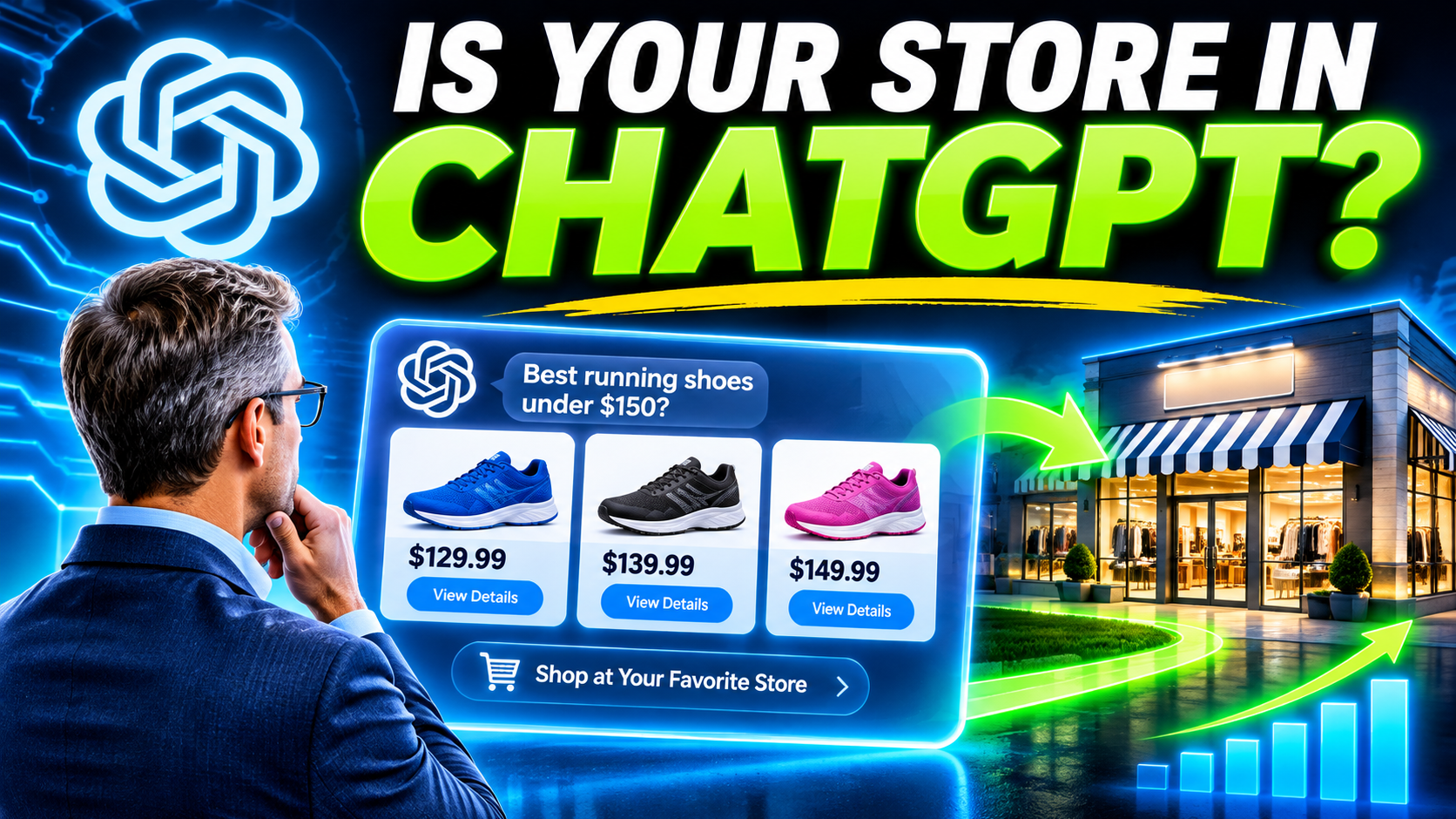
ChatGPT Shopping has changed. Retailers now have a new opportunity to claim their business, manage their information, and provide product data directly to OpenAI. Here is how to take advantage of the new AI commerce opportunity before your competitors do.
A customer used to walk into a store, ask a salesperson for help, compare products, and make a purchase. Then the internet changed everything. Customers started searching Google, reading reviews, comparing prices, and buying online.
Now another change is happening.
Customers are asking artificial intelligence what they should buy. They are asking ChatGPT to compare products, find better prices, recommend brands, and help them make purchasing decisions.
But here is the part many retailers are missing: Being visible in AI shopping is no longer just about having a website. Businesses now have new ways to provide their information directly to AI platforms.
On November 10, 2026, OpenAI introduced Businesses in ChatGPT. This new system gives eligible businesses the ability to claim their business, manage their information, provide product feeds, and explore new ways to interact with potential customers.
For retailers, this is a major opportunity.
The question is no longer simply whether people can buy inside ChatGPT. The bigger question is whether ChatGPT can find your products, understand why they are different, and send interested shoppers to your store.
Let's look at what changed, how to claim your business, and what retailers should do to compete in this new marketplace.
Key Takeaways
OpenAI introduced Businesses in ChatGPT on November 10, 2026.
Eligible businesses can claim their business through ChatGPT Business Hub.
Identity verification is required before certain management features become available.
Retailers can provide product feeds with descriptions, images, pricing, and availability.
Shopify merchants can connect their stores through supported integrations.
Standalone Instant Checkout is being phased back in favor of merchant-owned checkout experiences.
AI-referred retail traffic generated 83% more revenue per visit in Adobe's September 2026 research.
A claimed business profile does not guarantee recommendations or higher placement.
Your website remains an important source of product information, authority, and sales.
What Happened to ChatGPT Instant Checkout?
Let's start with the change that created this new opportunity.
When OpenAI introduced Instant Checkout in 2025, the idea was simple. A customer could ask ChatGPT for a product recommendation and complete a purchase without leaving the ChatGPT experience.
It sounded like the future of online shopping.
However, the approach changed.
In March 2026, OpenAI began moving away from standalone Instant Checkout and shifted its focus toward product discovery and merchant-owned checkout experiences.
That means shoppers can still use ChatGPT to discover and compare products, but the purchase journey is increasingly directed toward the retailer's own website or app.
OpenAI's current merchant information confirms this direction.
Read OpenAI's explanation of ChatGPT Shopping.
Why Does This Change Matter to Retailers?
Think about what happens when a customer asks:
"Find me a comfortable pair of waterproof walking shoes under $150 that will last."
ChatGPT can help compare products, features, prices, and available options.
The customer may then click through to the retailer's website to complete the purchase.
This creates an important opportunity for merchants.
You want your products to be included in the comparison before the shopper decides which retailer deserves the sale.
You also want the customer to land on a website that answers questions, builds trust, and makes buying easy.
AI discovery is becoming another path to your storefront. Your website is where you must be ready to convert that interest into revenue.
How Do You Claim Your Store in ChatGPT?
OpenAI introduced Businesses in ChatGPT in November 2026. The new Business Hub gives eligible businesses a way to claim their business and manage their information.
This is one of the most important developments for retailers entering AI commerce.
The process involves claiming the correct business, completing verification, and then updating the information available through the platform.
Step 1: Open ChatGPT Business Hub
Sign in to ChatGPT and open Business Hub from the sidebar.
Search for your business by name.
Select the listing that matches your organization.
You must own the business or have authorization to represent it.
Official starting point:
Claim your business in ChatGPT.
Step 2: Verify Your Connection to the Business
OpenAI may offer different verification methods depending on the business.
These can include:
Business phone verification.
Business email verification.
Website domain verification.
Shopify connection.
Follow the verification method shown for your listing.
Do not assume that submitting a claim means the claim has been approved.
Step 3: Complete Identity Verification
There is an important distinction between claiming a business and completing identity verification.
OpenAI uses Persona for identity verification.
You may need government-issued identification, business registration information, and proof that you are authorized to represent the business.
This second verification step matters.
According to OpenAI's current setup guidance, Persona approval is needed before businesses can publish certain profile changes, access insights, connect product feeds, or create eligible Business Agents.
A blue check appears on the business profile after the required verification is approved.
Read the official OpenAI setup instructions.
Step 4: Complete Your Business Information
Once approved, review the information associated with your business.
Include:
Correct legal business name.
Website address.
Business description.
Product or service categories.
Logo.
Relevant business information.
Delivery policies, where applicable.
Return policies, where applicable.
Keep the information consistent with your website and other business listings.
This is where your Source of Truth becomes important.
What Is a Source of Truth for AI Shopping?
A Source of Truth is the trusted, accurate, and consistently maintained collection of information that defines a business, its products, services, prices, policies, and identity.
For retailers, the Source of Truth should make it easy to confirm exactly what is being sold, who sells it, how much it costs, whether it is available, and where customers can buy it.
Think about a retailer selling the same product in several places.
The website says $89.99.
A shopping feed says $99.99.
An old promotion says $79.99.
Which price should an AI shopping system trust?
You have created a conflict.
The solution is to establish one reliable data source and keep all connected channels aligned.
A good Source of Truth includes:
Official business information.
Current product catalog.
Product descriptions and specifications.
Current pricing.
Inventory and availability.
Product images.
Shipping and return policies.
Product identifiers.
Customer service information.
Approved brand descriptions.
Your website, ecommerce platform, product feeds, and business profiles should support the same facts.
What Is a ChatGPT Product Feed and Why Does It Matter?
A product feed is a structured file that gives a shopping platform information about the products a retailer sells.
Instead of relying only on information that can be found by crawling a website, a merchant can submit organized product information directly.
OpenAI's product feed system supports information that helps ChatGPT understand and display products.
The current feed specification includes required information such as:
Product field |
What it tells AI |
|---|---|
item_id |
Unique product identifier |
title |
Product name |
description |
What the product is |
url |
Where to find the product |
brand |
Product brand |
seller_name |
Who sells it |
image_url |
Product image |
availability |
Whether it is available |
price |
Current selling price |
The feed also requires geographic information for the supported markets.
For the standard US feed, the documentation specifies US market settings.
You can review the full requirements here:
OpenAI Product Feed Specification.
Why Product Descriptions Matter
Let's say you sell a coffee machine.
A weak product description might say:
"Premium coffee machine. Great quality. Buy today."
That does not tell a shopper much.
A stronger description would explain:
Brewing capacity.
Machine dimensions.
Water tank size.
Available brewing settings.
Materials.
Warranty.
Compatibility.
Cleaning requirements.
Price.
Availability.
The more useful and accurate the information, the easier it is for a shopping system and a human customer to understand what the product offers.
Do not add claims that you cannot prove.
If your machine has a two-year warranty, state that.
If it does not, do not invent one.
Accuracy builds trust.
Should Every Product Have Its Own URL?
Yes, each product should have a clear product page.
Where a product has different sizes, colors, or models, make sure shoppers can select the correct version.
OpenAI's feed specification supports separate product and variant records with stable identifiers.
For example:
Blue coffee machine, model A.
Black coffee machine, model A.
Stainless coffee machine, model B.
Each product or purchasable variant should have accurate pricing, availability, images, and a stable product URL.
This reduces confusion when shoppers compare options.
ChatGPT Shopping vs. Traditional Ecommerce: What Is the Difference?
The biggest difference is how customers discover products.
Traditional ecommerce often starts with a customer visiting a retailer's website or searching a product category.
AI shopping starts with a conversation.
The customer explains what they need, and AI helps narrow the choices.
Traditional ecommerce |
AI-assisted shopping |
|---|---|
Customer searches product categories |
Customer describes a need |
Customer visits multiple websites |
AI helps compare available options |
Customer filters by price and features |
Customer asks follow-up questions |
Retailer provides product information |
AI uses available product and web information |
Customer completes checkout |
Customer typically completes checkout on the retailer's website or app |
The important point is that AI does not replace the retailer.
It changes how a shopper gets to the retailer.
When Is AI Shopping Not the Right Solution?
AI shopping optimization is not the first priority for every business.
If you do not have accurate prices, reliable inventory, working product pages, or a functioning checkout system, fix those problems first.
A retailer with poor product information will not solve its sales problem simply by submitting a product feed.
Likewise, a business that sells only customized services may benefit more from AI business discovery, lead generation, and appointment booking than from a retail product feed.
Choose the technology that matches the way your business makes money.
Why Is AI Shopping Traffic Becoming More Valuable?
Here is where the numbers get interesting.
Adobe published research on October 29, 2026, using data covering more than one trillion visits to US retail websites, 100 million products, and 18 product categories.
Its September 2026 findings showed:
AI-referred retail traffic grew 71% year over year.
AI-referred visitors converted 90% better than non-AI visitors.
AI-referred traffic generated 83% higher revenue per visit.
Visitors from AI sources spent 73% more time on retail websites.
They viewed 25% more pages per visit.
These are significant findings.
Read Adobe's original research.
Why does this matter?
A customer who arrives after asking AI to compare products may already understand what they want.
They may have reviewed features, prices, and alternatives before clicking through.
That can make the visitor more valuable.
However, these are industry-level measurements. Your results will depend on your products, market, website, pricing, and customer experience.
The lesson is not to assume that every AI visitor will buy.
The lesson is to start measuring AI traffic as its own marketing channel.
How Can You Get Your Products Recommended by ChatGPT?
Claiming your business is a starting point, not the entire strategy.
A verified profile does not guarantee that ChatGPT will recommend your business.
OpenAI has made that clear.
ChatGPT continues to make independent recommendations and comparisons.
You cannot simply claim a business and purchase your way into every recommendation.
You need to build a business that AI systems can understand, verify, and confidently present.
Here are seven areas to work on.
1. Build Clear Product Pages
Every important product should have its own page.
Start with a clear product name.
Explain what it does, who it is designed for, and what makes it different.
Include the specifications that customers use to compare products.
Make prices and availability easy to find.
Avoid hiding important product details inside images that search systems may not be able to read.
2. Use Structured Product Information
Structured data helps search engines identify the information on your pages.
For ecommerce websites, Product and Offer structured data can describe:
Product name.
Brand.
Price.
Availability.
Product images.
Product reviews.
Google supports Product structured data for eligible product experiences.
Google's Merchant Listing Structured Data Guide.
Remember that Google structured data and OpenAI product feeds serve different purposes.
One does not automatically replace the other.
A strong retailer should maintain accurate product information across both.
3. Create Helpful Buying Guides
Think about the questions customers ask before buying.
For example:
Which coffee machine is best for a small kitchen?
What is the difference between stainless steel and aluminum cookware?
How long should a home air purifier last?
Which running shoes are best for wide feet?
Create useful content that answers these questions.
Do not write articles just to repeat product keywords.
Explain the differences.
Show who should choose each product.
Include limitations.
Give customers enough information to make a smart decision.
4. Build Your Brand Authority
AI systems may use information from your website and other available sources.
Your business information should be consistent.
Your brand name, product names, contact details, and business descriptions should not change from one platform to another without a good reason.
This is part of building a reliable Source of Truth.
5. Make Sure AI Can Access Your Website
Your website must be technically accessible.
For ChatGPT Search, OpenAI identifies OAI-SearchBot as its search crawler.
If you want your pages to be eligible for inclusion in ChatGPT search results, review your robots.txt settings and make sure you are not blocking the relevant crawler.
OpenAI also explains that GPTBot and OAI-SearchBot serve different purposes.
Allowing one does not mean you have automatically allowed the other.
Review OpenAI's crawler documentation.
6. Keep Information Fresh
A product that is out of stock should not be presented as available.
A discontinued product should not continue appearing as a current offer.
Update your feeds when prices, inventory, or product information changes.
This is especially important during major sales periods.
7. Measure What Happens After the Click
Visibility is not the same as revenue.
Track:
AI referral sessions.
Product page visits.
Add-to-cart activity.
Completed purchases.
Average order value.
Conversion rate.
Revenue per visit.
Customer acquisition cost.
Your goal is not simply to appear in ChatGPT.
Your goal is to acquire profitable customers.
The Shortcut: Four Growth Systems That Help You Win in AI Commerce
This is where many businesses get stuck.
They understand that AI is changing how customers shop, but they do not have the time, technical knowledge, or staff to manage every part of the process.
You need a system that connects discovery, conversion, and revenue.
Digital Marketing All brings those pieces together.
Here are four ways we help businesses move forward.
1. Growbotik: Know What It Will Cost to Get More Customers
Growbotik is a revenue growth planning system.
Instead of guessing how much marketing you need, we start with a goal.
Tell us how many additional customers you want each month.
We build a revenue growth plan that shows what it would cost to pursue that goal.
Then we execute the plan, measure what is working, and adjust it each month to help achieve the desired customer growth.
For example, a retailer may want 25 additional customers each month.
The plan should identify the marketing activities, expected costs, customer acquisition targets, and performance measures needed to pursue that goal.
We then track the actual results rather than pretending every marketing campaign will perform exactly as predicted.
That is the difference between buying marketing services and managing marketing for measurable growth.
2. Always On AI: Never Lose Another Opportunity Because You Missed a Customer
Always On AI helps businesses respond to customers around the clock.
Think about someone visiting your website after seeing your products recommended by ChatGPT.
They have a question.
They want to know whether something is available.
They may want help choosing the right product.
If nobody responds, they may leave and buy from a competitor.
An AI Agent can help answer questions, qualify opportunities, capture information, and move customers toward the next step.
Always On AI includes:
24/7 AI phone answering.
Website chat.
Lead qualification.
Automated follow-up.
Appointment booking.
CRM synchronization.
Human takeover when needed.
AI discovery gets the customer to your business.
The next step is making sure your business is ready to respond.
3. Be Found Everywhere: Build Visibility Across the Digital Landscape
Be Found Everywhere helps businesses strengthen their visibility across search engines, directories, and AI discovery platforms.
Your business should not depend on one source of traffic.
You need a consistent presence where customers look for products and services.
That includes:
Google.
Bing.
ChatGPT.
AI-powered search.
Relevant business directories.
Social platforms.
Other discovery channels.
This is where an AI-driven strategy, a Local SEO specialist, and a Comprehensive digital marketing trends expert can help bring the pieces together.
The objective is to create a clear and consistent business identity across the places where customers and AI systems look for information.
4. Free Basic Website Design: Give Your Business a Better Place to Convert
You cannot expect an AI recommendation to produce sales if the website does not work.
Some businesses have no website.
Others have an outdated website that does not explain their services or make it easy for customers to take action.
We are giving away free basic website designs to help qualifying businesses get started or update an outdated online presence.
The goal is to provide a better foundation for turning visitors into leads.
Explore the free website design service.
A website should not simply look attractive.
It should explain what you sell, answer customer questions, build trust, and make the next step clear.
How Does Local SEO Affect AI Shopping and Business Discovery?
Although this article focuses on ecommerce, local businesses should pay attention too.
Think about a customer asking ChatGPT:
"Where can I buy a replacement water heater near me?"
Or:
"Which furniture stores in Lowell have adjustable beds available?"
These are local discovery questions.
The customer wants more than a product.
They want a nearby business that can provide it.
That is where Local SEO becomes important.
Keep Your Business Information Consistent
Your business name, address, phone number, website, and operating information should match across your important listings.
Your Google Business Profile should be accurate.
Your Bing Places information should be accurate.
Your website should clearly identify the locations you serve.
Your products and services should be described in plain language.
For retailers with physical stores, provide clear location and store information.
Why Google Business Profile Still Matters
AI search does not eliminate traditional local search.
Google continues to provide local business discovery through Maps and Search.
Google's own guidance for AI search features emphasizes foundational SEO, accessible content, accurate structured data, and updated Merchant Center and Business Profile information.
Read Google's AI Features and Your Website guidance.
This is why businesses should not abandon their existing SEO investments.
Instead, they should connect traditional SEO with GEO and AEO.
Google Local Service Ads management strategy, where appropriate, can also support customer acquisition for eligible service businesses. Google Guarantee management should be treated as a separate eligibility and program-management responsibility, not as a substitute for organic visibility.
Get Cited by AI (ChatGPT, Gemini, and Grok).
Let's talk about the bigger opportunity.
When a customer asks an AI platform for a recommendation, the platform may present a list of businesses or products, explain the differences, and provide links to sources.
Your business wants to be part of that conversation.
But how do you improve your chances?
You need to make your information easy to find, understand, and verify.
What Is GEO?
Generative Engine Optimization (GEO) is the process of improving a business's online information so generative AI systems can discover, understand, and potentially reference its products, services, and expertise.
GEO connects traditional SEO with content quality, business identity, structured information, and trusted external references.
What Is AEO?
Answer Engine Optimization (AEO) focuses on providing direct, useful answers to questions that people ask search engines and AI assistants.
For example, instead of writing a vague article about coffee machines, answer:
"What is the best coffee machine for a small apartment?"
Then explain the factors that matter, the available choices, and the situations where each option may be a better fit.
The Three Core Anchors of AI-Friendly Content
We recommend structuring important articles around three content elements.
Anchor 1: A clear definition.
Give a direct answer to the main question.
Anchor 2: A comparison table.
Make it easy to compare products, services, features, and differences.
Anchor 3: A counterfactual rule.
Explain when a product or service is not the right choice.
For example:
A large commercial coffee machine may be ideal for a busy restaurant but unnecessary for a small household.
That qualification helps the customer make a better decision.
It also makes your content more useful than a page that simply claims every product is the best.
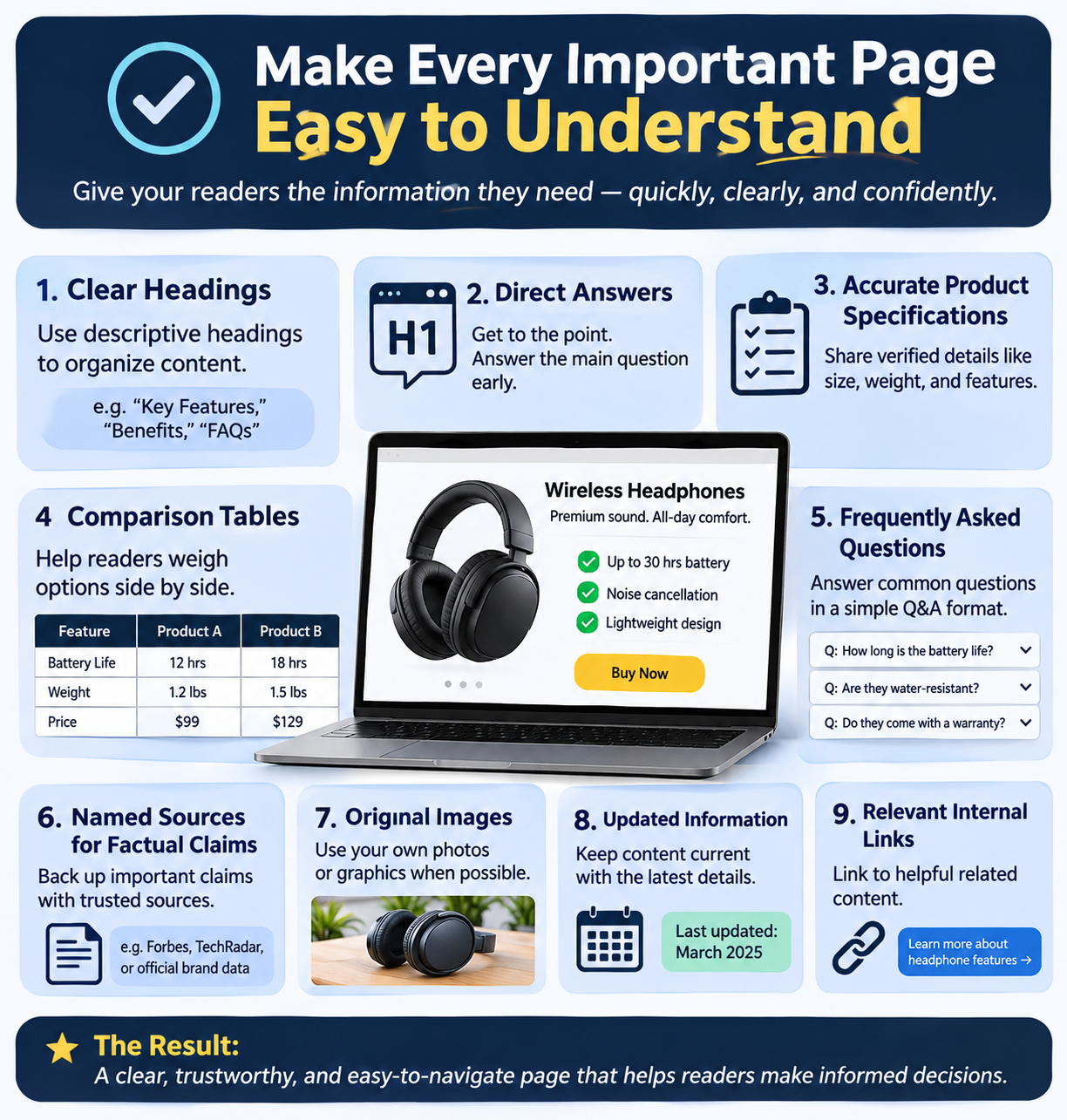
Make Every Important Page Easy to Understand
Use:
Clear headings.
Direct answers.
Accurate product specifications.
Comparison tables.
Frequently asked questions.
Named sources for factual claims.
Original images.
Updated information.
Relevant internal links.
Google has stated that there are no special additional technical requirements for appearing in AI Overviews or AI Mode beyond the existing requirements for Google Search.
The same basic lesson applies: build useful, accessible content and do not chase imaginary ranking tricks.
Can Agentic Interoperability Management Help Retailers Prepare for AI Agents?
Yes, but it is important to understand what this means.
AI shopping is moving beyond simple recommendations.
AI agents are increasingly being designed to interact with websites, services, and business systems.
This creates a need for businesses to make their information and services easier for software to understand and use.
We refer to this broader operational challenge as Agentic Interoperability Management (AIM).
AIM is a strategic framework, not a formal OpenAI certification or a universal technical standard.
It focuses on making sure your business information, systems, and approved actions can work together when authorized AI agents interact with them.
What Is Agent Card Optimization?
Agent Card Optimization (ACO) is an emerging strategy for making an AI agent's identity, capabilities, instructions, and available actions clear to the systems that may interact with it.
It should help answer:
Who operates this agent?
What business does it represent?
What can it do?
What information can it access?
What actions can it take?
What are its limitations?
When must it ask a human for approval?
An agent should not claim it can book an appointment if it cannot access the booking system.
It should not promise inventory that it cannot verify.
It should not quote prices that are no longer valid.
Clear capabilities and clear limits build trust.
Why Public MCP Servers Matter
Model Context Protocol (MCP) provides a standardized way for AI applications to connect to external tools and information.
An MCP server can expose approved tools, resources, and other capabilities to compatible AI clients.
For example, a retailer could eventually make approved capabilities available through an MCP server, such as:
Checking product availability.
Looking up current prices.
Retrieving shipping policies.
Checking order status.
Finding store locations.
A public MCP server is not required to claim a ChatGPT business profile or submit a ChatGPT product feed.
It is a separate integration strategy for businesses that want to make approved information and actions available to compatible AI systems.
Security is essential.
Public does not mean unrestricted.
A business must use authentication where needed, control permissions, validate inputs, protect customer data, and require human approval for sensitive actions.
The Model Context Protocol specification provides the technical foundation.
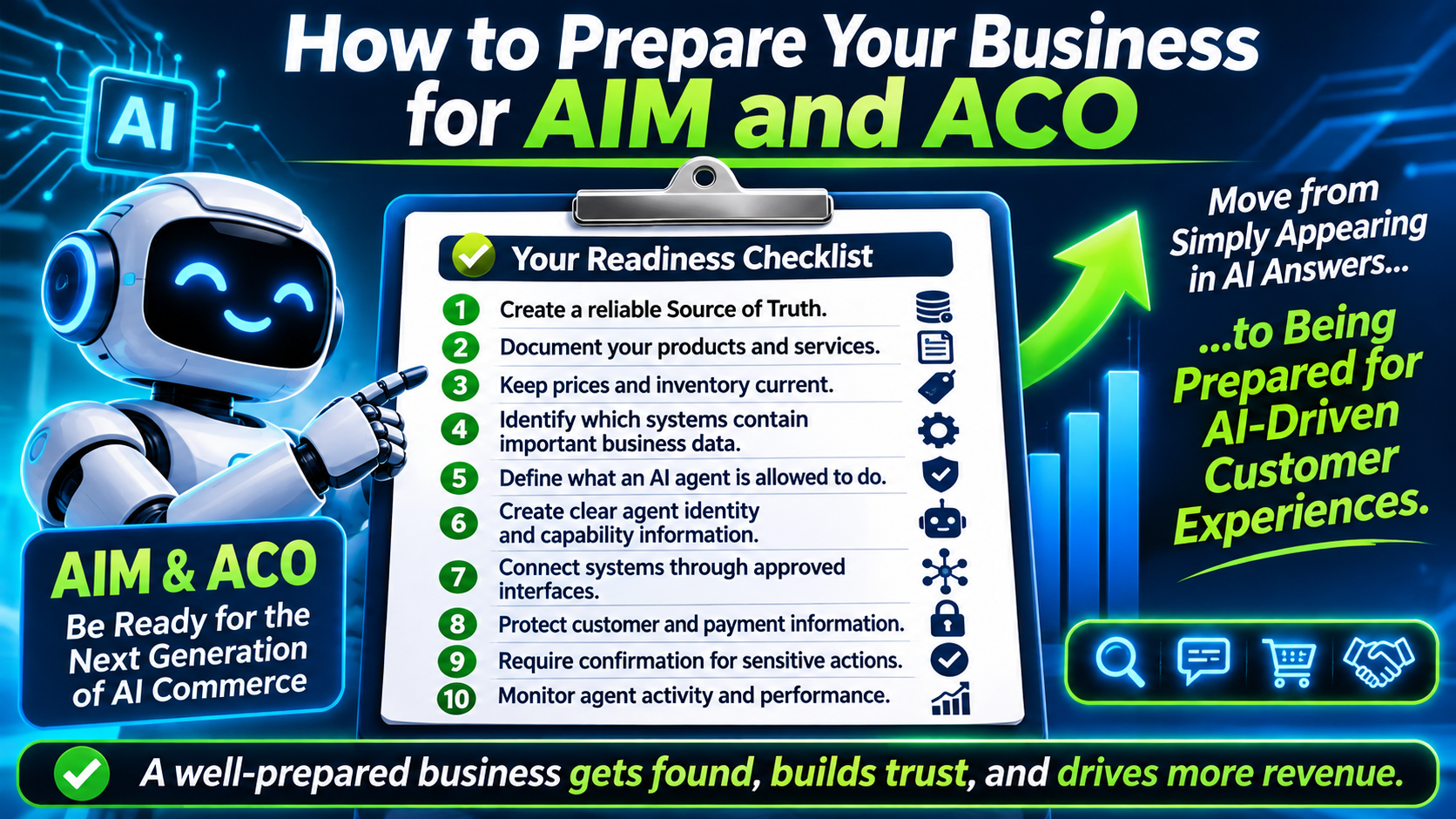
How to Prepare Your Business for AIM and ACO
Start with a simple checklist:
Create a reliable Source of Truth.
Document your products and services.
Keep prices and inventory current.
Identify which systems contain important business data.
Define what an AI agent is allowed to do.
Create clear agent identity and capability information.
Connect systems through approved interfaces.
Protect customer and payment information.
Require confirmation for sensitive actions.
Monitor agent activity and performance.
This is how you move from being a business that merely appears in AI answers to a business that is prepared to work with AI-driven customer experiences.
How Should You Measure the ROI of ChatGPT Shopping?
Let's bring this back to something every business owner understands: money.
A retailer does not need another marketing report filled with impressions and clicks.
The owner needs to know whether marketing is bringing in profitable customers.
Start with these five measurements.
1. AI-referred traffic
How many people arrive from ChatGPT and other AI platforms?
2. Conversion rate
What percentage of those visitors complete a purchase?
3. Revenue per visit
How much revenue does each AI-referred visit generate?
4. Customer acquisition cost
How much does it cost to acquire a paying customer?
5. Return on marketing investment
How much revenue and profit does the marketing investment produce?
Here is a simple example.
Assume a retailer receives 500 AI-referred visits in a month.
Of those visits, 25 become customers.
The average purchase is $120.
That produces:
500 visits.
25 purchases.
5% conversion rate.
$3,000 in attributed revenue.
If the retailer spends $750 on the activities associated with acquiring that traffic, the revenue-to-cost ratio is 4:1.
That does not mean the retailer made $2,250 in profit. Product costs, shipping, fulfillment, labor, and other expenses still need to be deducted.
This is why accounting-level measurement matters.
Track the complete financial picture, not just the number of visitors.
Two Business Examples: What Could AI Commerce Look Like in Practice?
The following are illustrative planning scenarios, not verified Digital Marketing All client case studies. The numbers are example targets used to demonstrate how a retailer could measure a strategy. They are not reported customer results.
Example 1: A Furniture Store in Lowell, Massachusetts
A local furniture retailer sells mattresses, bedroom furniture, and adjustable beds.
The owner has a website, but the product descriptions are short. Customers often call to ask about dimensions, delivery, available colors, and product differences.
The business wants to capture more customers who research products through ChatGPT.
The first step is to create a clear product catalog.
The team identifies the most important products, prepares detailed descriptions, checks current pricing, and makes sure product availability is accurate.
Next, the retailer claims its eligible business profile through Business Hub and completes the required verification.
The team then reviews whether a product feed is available for its business and prepares the required product data.
The website receives updated product pages with clear specifications, delivery details, and buying guides.
The retailer also creates a simple conversion measurement plan.
Its illustrative monthly target is 20 additional completed sales.
If the average order value is $1,200, the revenue target associated with those additional sales would be $24,000.
That is a target, not a forecast or guaranteed result.
The retailer measures product views, inquiries, purchases, and actual revenue to determine whether the strategy is working.
The important lesson: AI visibility should be connected to product data and a clear financial goal.
Example 2: A Specialty Outdoor Store in Concord, Massachusetts
A specialty outdoor retailer sells hiking equipment, waterproof clothing, backpacks, and camping supplies.
Customers often have detailed questions.
Which backpack is best for a weekend trip?
What type of waterproof jacket should someone buy for winter hiking?
Which hiking boots are suitable for rocky terrain?
The store has knowledgeable staff, but its website does not answer enough of these questions.
The owner decides to build a stronger content and product strategy.
The team creates comparison pages, buying guides, and detailed product descriptions.
Each important product page includes specifications, available sizes, images, current pricing, and links to relevant accessories.
The retailer also prepares its product information for AI shopping discovery.
Its illustrative target is 30 additional monthly purchases, with an average order value of $160.
That represents a potential monthly revenue target of $4,800 if the target is achieved.
The business then measures which products receive interest, which pages convert, and which marketing activities bring in profitable customers.
The lesson: customers do not just want a product name. They want help choosing the right product.
Businesses that answer those questions clearly have a better chance of earning customer trust.
What Should Retailers Do Right Now?
You do not need to rebuild your entire business overnight.
Start with the basics.
First: Check whether your business can be claimed in ChatGPT Business Hub.
Second: Complete the required verification.
Third: Review your business profile and product information.
Fourth: Make sure your website has clear product pages.
Fifth: Review your product feed requirements.
Sixth: Make sure prices and inventory match your actual store.
Seventh: Build useful buying guides and comparison content.
Eighth: Measure AI traffic and completed purchases.
Ninth: Connect your marketing activities to revenue goals.
Tenth: Review the results each month and improve the areas that are not working.
The businesses that prepare now will be in a better position to adapt as AI shopping continues to change.
Why Choose Digital Marketing All to Help You Win the AI Commerce Opportunity?
The next generation of digital marketing is not about collecting more website visitors and hoping something happens.
It is about building a connected system.
You need to be discoverable.
You need accurate information.
You need a website that converts.
You need a way to respond to customers.
And you need to know whether the investment is producing additional revenue.
That is the approach at Digital Marketing All.
We combine AI-driven marketing, GEO, AEO, traditional SEO, website development, paid advertising, conversion optimization, and revenue planning.
We also understand that every business has different needs.
A retailer may need product feed management and ecommerce optimization.
A local service company may need Google Business Profile optimization, Google Guarantee management, and Top-tier Google Local Service Ads management.
Another business may need a Mid-funnel focused content strategy that turns early research into qualified opportunities.
We bring together Full-funnel digital marketing solutions, Proprietary SEO tools, and practical AI technology to help businesses compete.
We do not believe marketing should be measured by how many reports an agency sends.
It should be measured by what it contributes to the business.
Your competitors are already learning how to show up where AI-powered customers are looking. The question is whether your business will be ready when those customers start asking for recommendations.
Frequently Asked Questions
1. Can shoppers still buy directly inside ChatGPT?
OpenAI is moving away from standalone Instant Checkout and prioritizing product discovery with merchant-owned checkout. Shoppers can discover and compare products in ChatGPT, then complete purchases through participating retailers' websites or apps.
2. How do I claim my store in ChatGPT?
Open ChatGPT Business Hub, search for your business, select the correct listing, and complete the available business verification steps. You must also complete Persona identity verification before accessing certain management features.
3. Is ChatGPT Business Hub free?
OpenAI's business claiming process is separate from advertising and does not require an Ads account. Check the current Business Hub terms for any fees associated with separate services or integrations.
4. Does ChatGPT automatically list Shopify products?
Shopify catalogs are integrated into ChatGPT Shopping. Shopify merchants can also connect their stores through supported Business Hub integrations. Review the current setup instructions to determine whether additional steps are required for your store.
5. Does claiming my business guarantee ChatGPT will recommend me?
No. Claiming allows eligible businesses to manage their information and access available features. ChatGPT continues to make independent recommendations. A verified profile does not guarantee higher placement or additional sales.
6. Do I need a product feed to appear in ChatGPT Shopping?
Not necessarily. ChatGPT can use public website information and other available sources. However, an eligible product feed gives retailers more control over the product details, prices, and availability supplied to OpenAI.
7. How can I improve my chances of being recommended by AI?
Maintain accurate business information, create detailed product pages, provide reliable product data, publish helpful buying guides, build brand authority, and ensure your website is accessible to relevant search crawlers. Measure AI-referred traffic and sales to understand the business impact.
I hope you enjoy reading this blog post. If you want to be our next success story, have my team do your marketing. Click here to book a call!
Tell us how many new clients you want a month. We will create a free revenue growth plan to achieve those new clients.
Click to get your revenue growth plan with Growbotik.
Recommended Reading
These three existing articles belong in the same AI discovery and GEO topic cluster:
1. How Will a ChatGPT Business Profile Change How Customers Find Your Business?
2. How Do AI Search Engines Calculate Semantic Vector Distance Between Competing Brands?
3. Is Your Website Confused? Stop Your Content From Fighting Itself in the Age of AI Search


Write A Comment