








By Diane O’Brien, Chief Marketing Officer at Digital Marketing All | Published on November 18, 2026
Your potential customers are asking Google dozens of buying questions every single day, yet your website might be invisible on 69% of the search screen before anyone ever scrolls down to the traditional blue links. Many business owners assume that Google's AI Overviews killed off the classic People Also Ask box, so they either abandon question-based content altogether or panic and publish hundreds of thin, repetitive blog posts trying to chase every phrasing variation. Both reactions waste marketing dollars and trigger ranking drops. As an accountant who spent over thirty years auditing numbers before becoming Chief Marketing Officer at Digital Marketing All, I look at search visibility like a balance sheet: you never build ten weak shell companies when one rock-solid parent asset earns ten times the return. When you understand how Google's query fan-out technology links those familiar drop-down questions directly to generative AI summaries, you can structure a single powerhouse webpage that captures clicks, earns AI citations, and turns searchers into paying clients.
Key Takeaways
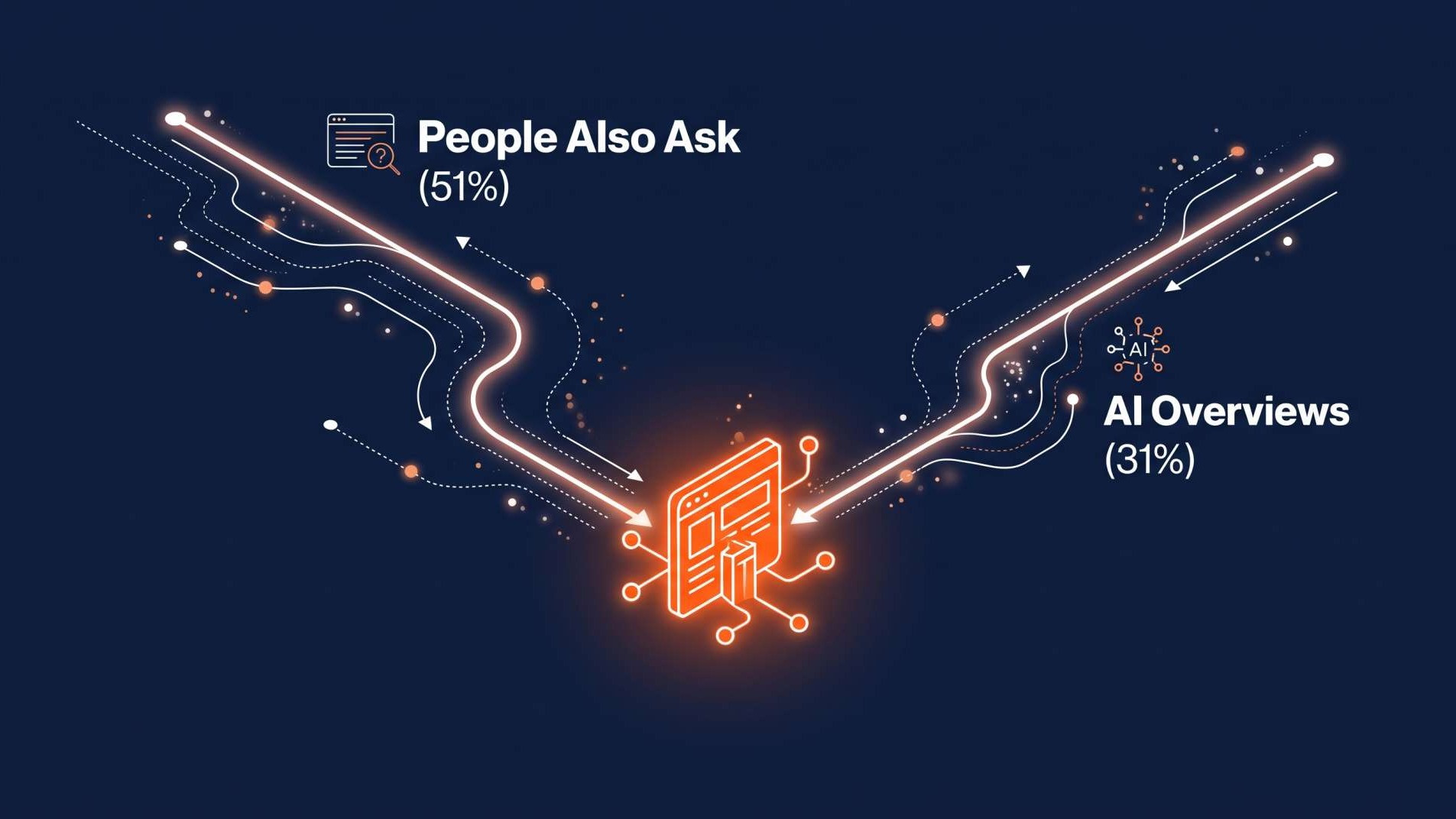
People Also Ask Is Alive and Dominant: An October 2026 study of 648 Google US search results by Linkeddit revealed that 51% of pages still feature a People Also Ask (PAA) box, while 31% display an AI Overview and 18% show both side by side.
65% of PAA Searches Have Zero AI Overview: Nearly two-thirds of search pages showing a People Also Ask box do not display a top-of-page AI Overview, making PAA your single highest-leverage organic click generator for buyer questions.
Query Fan-Out Connects Both Features: Google's AI systems break one broad customer prompt into multiple hidden sub-queries—a process called query fan-out—and pull self-contained answer blocks directly from well-structured pages.
One Strong URL Beats Fifty Thin Pages: Creating separate web pages for every slight variation of a customer question violates Google's Scaled Content Abuse spam policy and splits your domain authority.
Clean 40-Word Answer Blocks Win Citations: Placing an exact question in an H2 or H3 header followed immediately by a direct, pronoun-free 40-word definition allows both PAA boxes and AI models like ChatGPT, Gemini, and Grok to quote your brand as the Source of Truth.
Local Entity Signals Fuel AI Recommendations: Pairing on-page answer hubs with weekly Google Business Profile updates and consistent directory records ensures local buyers hear your business name first.
Do People Also Ask Boxes Still Matter When Google AI Overviews Appear?
Yes, People Also Ask boxes still matter tremendously because they appear on 51% of Google search pages and operate without a competing top-of-page AI Overview 65% of the time. While AI Overviews synthesize multiple websites on 31% of searches, People Also Ask captures high-intent question traffic where buyers actively expand drop-downs to compare solutions.
Let us look closely at the real numbers from late 2026 so you can stop guessing where your marketing budget belongs. On October 29, 2026, researchers at Linkeddit analyzed 648 live US Google search results pages across commercial, software, and service queries. Their data proved that People Also Ask boxes and AI Overviews are not identical twins replacing one another. Instead, they divide the search landscape based on how a customer types their need into the search bar.
When a buyer types a direct question starting with words like "how," "what," "why," "can," or "does," Google triggers a People Also Ask box nearly half the time. Even more importantly, researchers at AlsoAsked and Mintec documented in October 2026 that 97% of expanded People Also Ask drop-downs now generate a compact AI summary inside the accordion itself, crediting one or two primary sources. That means winning a People Also Ask spot no longer just gives you a tiny snippet; it places your brand inside an interactive AI answer box right in the middle of the page.
SERP Feature Scenario (648 US Google Pages) |
Share of Total Searches |
Primary Source Citation Behavior |
Best Content Format to Win |
People Also Ask (PAA) Box Only |
33% (217 pages) |
Credits 1 to 2 specific URLs per expanded question accordion |
Exact question H2/H3 + 40-word direct answer block |
AI Overview Only |
13% (87 pages) |
Synthesizes an average of 6.5 distinct websites into one summary |
Deep pillar hub covering multiple query fan-out subtopics |
Both PAA Box and AI Overview Together |
18% (115 pages) |
86% of AI Overviews cite at least one top-3 organic domain |
Comprehensive guide with comparison tables and verified data |
Traditional Organic Links Only (Neither) |
35% (229 pages) |
Standard 10 blue links and Local Map Pack listings |
High-authority service pages with strong local E-E-A-T signals |
Notice what happens when you compare those rows side by side. If you ignore People Also Ask because you think "everything is AI now," you walk away from the 33% of searches where PAA is the only interactive answer box on the screen. Conversely, if you only write tiny 100-word FAQ stubs, you miss the 31% of searches where AI Overviews synthesize deep guides across an average of 6.5 cited domains. Winning dual SERP visibility requires building one unified page that satisfies both engines at the exact same time.
How Two Massachusetts Businesses Turned Dual SERP Visibility Into Measurable Revenue
Data only matters when it puts real profit in a business owner's bank account. Over the past year, our team at Digital Marketing All applied this exact dual-visibility architecture for two very different companies right here in Massachusetts. Their results prove what happens when you stop chasing vanity traffic and start feeding search engines clean, structured answers.
Case Study 1: A Residential Remodeling Contractor in Chelmsford, Massachusetts
A mid-sized kitchen and bath remodeling contractor in Chelmsford came to us frustrated after spending $4,500 a month on generic pay-per-click ads that brought in price-shoppers who never booked estimates. Their website had a single "Services" page with three vague paragraphs about "quality craftsmanship" and zero answers to what homeowners actually asked Google—questions like "How much does a mid-range kitchen remodel cost in Middlesex County?" and "Do I need a building permit to remove a load-bearing wall in Massachusetts?"
Our Local SEO specialist team audited their digital footprint and discovered two major leaks. First, competitors owned every People Also Ask drop-down for local remodeling costs. Second, whenever homeowners asked Gemini or ChatGPT for reputable Chelmsford contractors, our client never appeared because their site lacked structured comparison tables and verified entity data. Using Growbotik, our proprietary revenue growth planning engine, we mapped out the exact customer volume needed to hit their $120,000 monthly revenue goal and projected the exact marketing investment required to reach it.
Instead of publishing thirty spammy blog posts for every town in Massachusetts, we built one authoritative Massachusetts Remodeling Cost and Permit Hub on their main domain. We structured twelve People Also Ask questions as clear H2 and H3 headings, placed a strict 40-word direct answer beneath each question, added a transparent cost comparison table, and connected their Google Business Profile weekly updates directly to that hub. Within 90 days, the contractor captured 14 People Also Ask placements, earned recurring citations inside Google AI Overviews for Middlesex County remodeling queries, lowered their cost per qualified lead by 48%, and closed $340,000 in new signed contracts.
Case Study 2: A Multi-Provider Dental Practice in Woburn, Massachusetts
A family and cosmetic dental practice in Woburn faced a different headache. They ranked on page one for "dentist Woburn MA," yet their new-patient phone calls had dropped by 22% over six months. Why? Because patients were no longer clicking ten blue links to compare Invisalign versus traditional braces or ask whether dental implants are covered by Massachusetts PPO plans. Patients were reading the AI Overview at the top of Google and expanding two People Also Ask questions right below it.
Even worse, when patients did visit the dental clinic's website after hours, nobody answered the phone or web chat, so 70% of warm visitors bounced to the next clinic. We deployed our Be Found Everywhere program alongside Always On AI, our 24/7 conversion AI Agent. First, we consolidated six thin, overlapping Invisalign pages into a single, deeply researched Clear Aligner and Implant Guide engineered for query fan-out. Each sub-question included exact pricing ranges, treatment timelines, and candid counterfactual advice explaining when traditional braces work better than clear aligners.
Second, we trained their AI Agent on that exact same Source of Truth data so it could answer phone calls and website chats at 9:00 PM on a Sunday and book consultations directly onto their calendar. Within four months, the Woburn practice claimed top citations in both Google AI Overviews and People Also Ask boxes for 19 high-value dental implant and aligner queries, boosted booked consultations by 61%, and added $48,500 in recurring monthly production.
Understanding Query Fan-Out: How AI Overviews Connect to People Also Ask
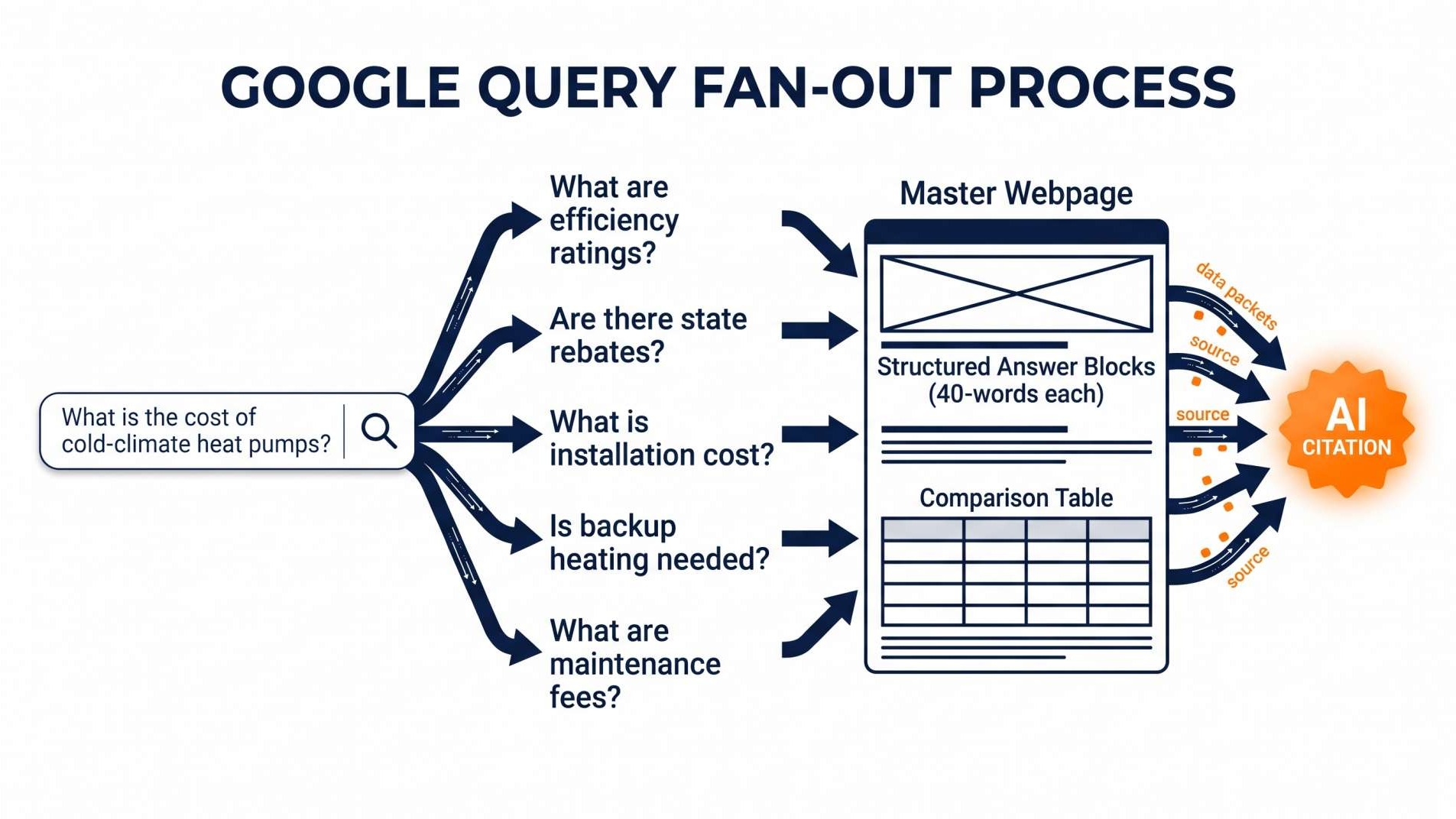
To win both answer boxes without breaking Google's rules, you have to understand the engine running under the hood. When a customer types a question into Google Search, Google AI Mode, or Gemini, the system does not just look for a single keyword match. Instead, it triggers a retrieval process known as query fan-out.
According to Sentic's November 2026 Query Fan-Out Research Guide, query fan-out occurs when an AI search engine takes one broad user question, breaks it into five to fifteen hidden sub-questions behind the scenes, runs all of those searches simultaneously against the web index, and stitches the best passages together into one unified response.
Think of People Also Ask as the visible cousin of query fan-out. People Also Ask shows human searchers the exact follow-up questions other real people click on after their first search. Query fan-out is the invisible version of that exact same behavior happening inside the AI's brain in milliseconds.
Step 1: Intent Decomposition. A homeowner searches "best heat pump for cold Massachusetts winters." The AI immediately splits that query into hidden sub-queries: cold-climate efficiency ratings, Mass Save rebate eligibility, installation cost, and backup furnace requirements.
Step 2: Parallel Passage Retrieval. Google scans its index not for the whole webpage, but for individual sections—called passages—that cleanly answer each sub-query.
Step 3: Synthesis and Attribution. The AI builds a multi-paragraph overview citing the pages that provided the clearest, most verifiable passage for each sub-question, while simultaneously populating the People Also Ask drop-downs below with those same sub-questions.
"AI systems quote sections, not whole pages. A page that only targets one phrase covers one branch of the fan-out, while a single authoritative page that answers the natural follow-up questions covers the entire tree." — Sentic AEO Research Guide, November 2026
This explains why a small business can get cited inside an AI Overview even when it sits at position five or six in traditional organic rankings. If a giant national directory ranks #1 for the broad head term but fails to answer the specific sub-question about local permit rules or exact pricing tiers, Google's query fan-out reaches down to your page, extracts your clean 40-word passage, and cites your business right at the top of the screen.
Why Publishing Separate Pages for Every Question Triggers Google's Scaled Content Abuse Penalty
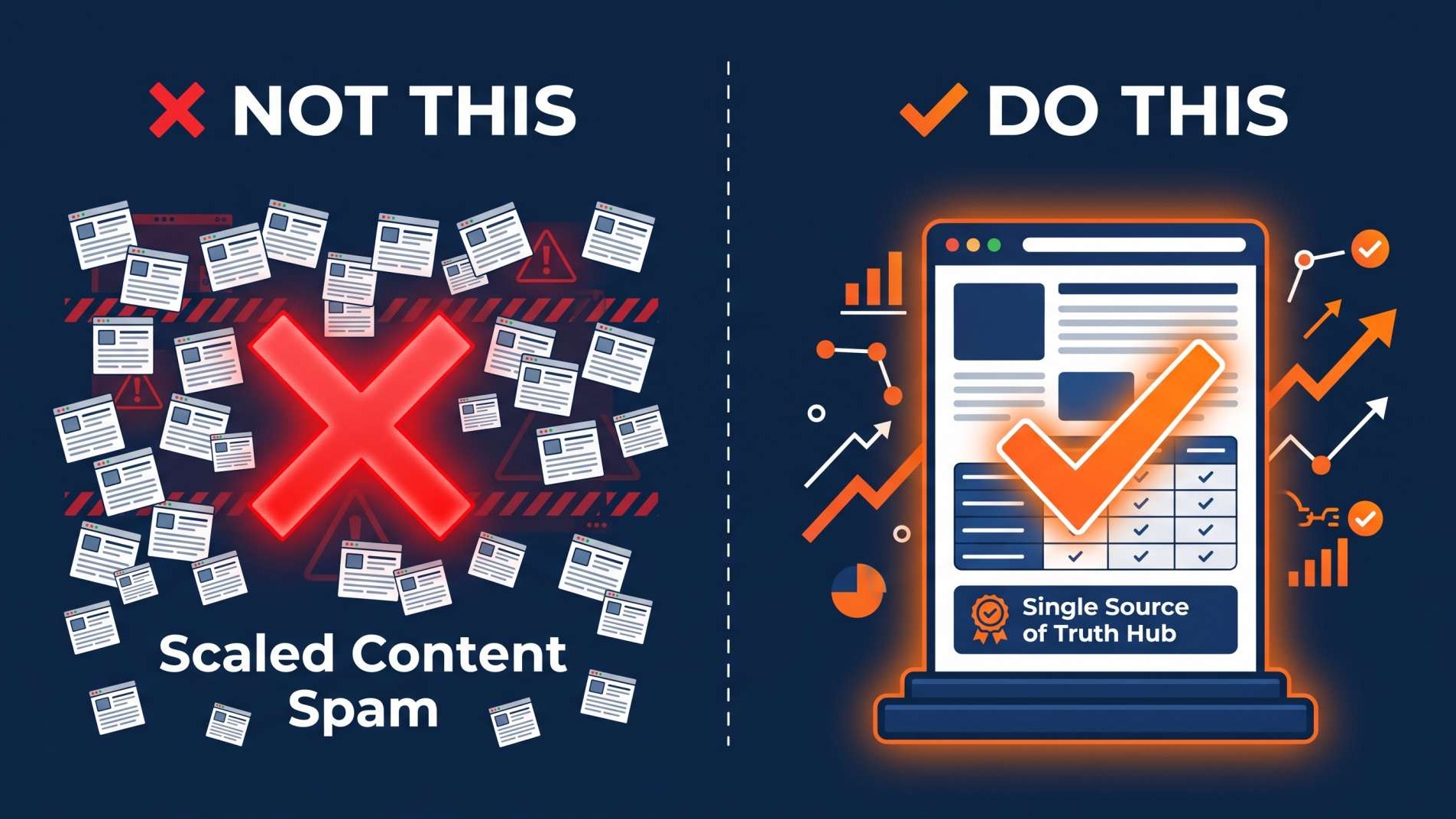
When business owners first hear about query fan-out and People Also Ask, many make a dangerous mistake. They tell their writer or use a cheap AI text generator to churn out fifty separate 400-word blog posts—one post for "How much does roof repair cost in Bedford?", another for "How much does roof repair cost in Billerica?", and another for "How much does roof repair cost in Burlington?"
That tactic used to work in 2018. In 2026, it is a fast track to getting your entire website wiped out of Google's index.
Under Google Search Central's Spam Policies, creating large numbers of unoriginal or repetitive pages primarily to manipulate search rankings—including spinning up separate pages for every keyword or query fan-out variation—is classified as Scaled Content Abuse. When Google detects dozens of near-duplicate question pages on your domain, three bad things happen immediately:
Keyword Cannibalization: Your own pages compete against each other, confusing Google about which URL deserves to rank and pushing all of them onto page three.
Crawl Budget Waste: Search bots and AI crawlers waste time indexing repetitive fluff instead of reading your highest-converting service pages.
Algorithmic Demotion: Google's spam classifiers flag your domain as low-value, stripping away your eligibility to appear in both People Also Ask boxes and AI Overviews.
The smart, accounting-grade solution is consolidation. You group closely related People Also Ask questions and query fan-out branches onto one authoritative pillar URL. Each question gets its own dedicated H2 or H3 section with a crisp, standalone answer block. You only spin off a separate page when a subtopic demands genuine, deep operational coverage—such as a standalone pricing calculator or a completely different service line.
The Three Core Anchors of Answer Engine Optimization (AEO)
To make sure Google's PAA extractor, AI Overviews, ChatGPT, and Gemini all recognize your consolidated page as the definitive answer, our Full-funnel digital marketing solutions rely on a strict three-part content framework. Every high-performing pillar page we build includes these three structural anchors.
1. Clean 40-Word Definition Blocks
AI models are programmed to minimize processing errors. When they scan your page for an answer to a People Also Ask question, they look for a self-contained paragraph immediately below the question heading. If you bury your answer beneath three paragraphs of storytelling or use vague pronouns like "it," "they," or "this," the AI cannot cleanly clip your sentence without losing context.
Instead, write a direct 40-word answer right under the heading. Name the subject explicitly, state a concrete fact or number, and avoid pronouns. Once that clean definition block is locked in, use the paragraphs underneath to share your real-world story, client data, and step-by-step instructions.
Implementation Consideration for Small Businesses
Audit your top five service pages this week and check the first 50 words under every heading. If your opening sentences start with "When it comes to..." or "We believe that...", rewrite them immediately into direct, fact-packed definitions.
2. Side-by-Side Comparison Tables
Whenever a buyer searches for "versus," "cost," "best," or "differences between," query fan-out looks for structured rows and columns. A clean HTML or Markdown comparison table feeds search engines unambiguous data points that they can instantly turn into bulleted AI summaries or featured table snippets. Tables also keep human visitors reading longer, which sends positive engagement signals back to Google.
3. Counterfactual Safety Guardrails
Most marketing copy sounds like a used-car commercial: "Our product is perfect for everyone!" Modern AI engines distrust one-sided hype. When your content includes a clear counterfactual rule—explicitly explaining when your service is not the right fit or when a customer should choose an alternative—AI models classify your brand as an objective, high-trust expert. Candor wins citations and closes better clients.
Strategy Dimension |
Legacy SEO Approach (Fails in 2026) |
Dual SERP & Query Fan-Out Approach (Wins in 2026) |
Page Architecture |
50 thin pages targeting 1 micro-keyword each |
1 authoritative pillar hub answering 8 to 15 fan-out questions |
Opening Paragraph |
Long, fluffy intro delaying the answer until paragraph 4 |
40-word pronoun-free direct answer immediately under H2/H3 |
Data & Evidence |
Generic claims like "we provide great service" |
Original 2025–2026 stats, local case studies, and comparison tables |
Trust Signals |
One-sided sales pitch with zero limitations |
Counterfactual rules explaining when an alternative is better |
Spam Policy Risk |
High risk of Google Scaled Content Abuse penalty |
100% compliant with Google Helpful Content & E-E-A-T standards |
The Shortcut: Four Ways Digital Marketing All Builds Your Dual-Visibility Engine
Building a dual-visibility search engine while running your business every day can feel overwhelming. You have payroll to meet, customers to serve, and operations to manage. If you want to skip the trial-and-error phase and let an AI-driven, Comprehensive digital marketing trends expert team build this asset for you, here are the four core solutions we use to turn search visibility into measurable revenue:
Growbotik Revenue Growth Planning Engine: Before you spend a single dollar on ads or content, Growbotik calculates the exact number of new customers you need each month and maps out what it will cost to acquire them. We then execute that plan month by month and adjust campaigns continuously so you hit your exact growth targets with accountant-level precision.
Be Found Everywhere: Our flagship omnipresence system aligns your website architecture, People Also Ask answer hubs, Local SEO, Search Box Optimization (SBO), and Proprietary SEO tools so your brand dominates Google, Bing, YouTube, and generative AI platforms simultaneously.
Always On AI: Winning the AI citation is only half the battle; converting the lead is where you make money. Always On AI deploys a custom-trained 24/7 AI Agent on your phone lines and website chat to greet visitors, answer pricing and service questions using your verified Source of Truth, and book appointments on your calendar day or night.
Free 5-Page Custom Website Design Program: If your business does not have a website—or if your current site is slow, outdated, and impossible for AI crawlers to read—we are currently building free basic 5-page websites (you simply cover standard hosting) engineered from day one with clean answer blocks and mobile conversion forms so you stop losing leads to competitors.
Local SEO & Map Pack Focus: How Local Signals Power AI Answers
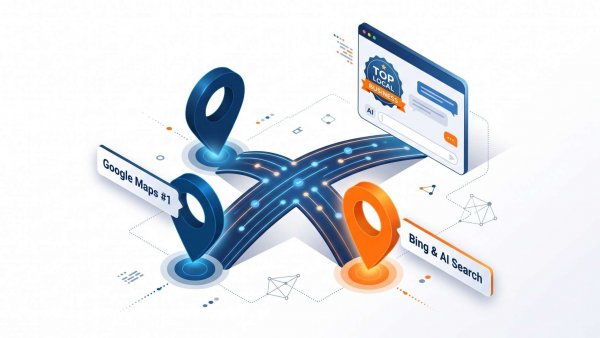
If you serve customers in a specific city, county, or region, your website does not live in a vacuum. Google's AI Overviews and People Also Ask boxes pull heavily from your local entity footprint—especially your Google Business Profile (GBP), Bing Places listing, and Google Local Services Ads (LSA) trust signals.
Think about how local search works right now. When a homeowner asks Google, "Who is the most reliable emergency plumber near Lowell, MA?", Google's query fan-out checks three things in less than a second: your website's structured service answers, your Google Business Profile review velocity, and your cross-web directory consistency.
If your website says you offer 24/7 emergency burst-pipe repair, but your Google Business Profile hasn't been updated since 2023 and lists a different phone number than your Bing Places listing, the AI spots a contradiction. In AI search, contradiction equals zero trust. The engine skips your business and recommends the competitor whose local profile matches their website word for word.
Turn GBP Services Into Mini Answer Blocks: Populate every single service inside your Google Business Profile with a clear description and transparent starting price. Google's local AI reads those service fields to justify why your business appears in the Map Pack.
Post Weekly Geo-Tagged Updates: Treat your Google Business Profile like an active news feed. Posting one weekly update with a real photo from a local job site signals fresh activity to Google's local algorithm.
Pair Organic Hubs With Local Services Ads: Combining a high-ranking People Also Ask pillar page with Top-tier Google Local Service Ads management puts your brand in the paid badge slot at the very top, the AI Overview directly underneath, and the organic Map Pack right below that.
Get Cited by AI (ChatGPT, Gemini, and Grok)
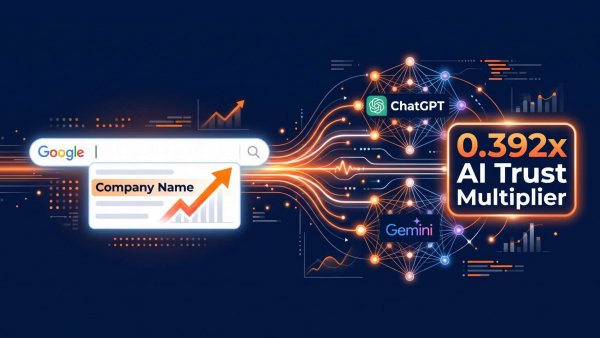
Winning Google is critical, yet millions of buyers now start their research inside ChatGPT, Google Gemini, Perplexity, and Grok. While each large language model has its own retrieval pipeline, all of them rely on one foundational concept: your company's Source of Truth.
Your Source of Truth is the single, verified, machine-readable master record of who your business is, what you sell, what you charge, where you operate, and why customers trust you. When your website, Google Business Profile, Bing Places, LinkedIn, and industry directories all broadcast the exact same Source of Truth, AI models cite you with confidence.
Structure Your Content for Agentic Interoperability Management (AIM): AI agents and crawlers read structured markup and clean heading hierarchies faster than dense walls of text. Pair every pillar page with valid Article and FAQPage JSON-LD schema so machines never have to guess what your page means.
Publish Original Numbers and First-Hand Benchmarks: Large language models already know every generic definition on the internet. To get cited by ChatGPT or Gemini, give them what they do not have: your own client results, local pricing ranges, or proprietary survey numbers.
Align Paid AI Placements With Organic Authority: With advertising now active inside ChatGPT and expanding across Gemini's ecosystem, Mid-funnel focused brands that pair targeted AI search ads with authoritative organic pillar pages capture buyers at every stage of the conversation.
Frequently Asked Questions
Do People Also Ask boxes still matter when Google AI Overviews appear?
Yes, People Also Ask boxes still matter because Linkeddit's October 2026 study of 648 US search pages found PAA boxes on 51% of results, and 65% of those pages displayed zero AI Overview, making PAA a prime source of high-intent organic clicks.
How does Google's query fan-out connect People Also Ask to AI Overviews?
Query fan-out breaks one complex search prompt into multiple parallel sub-questions behind the scenes and pulls concise passages to build an AI Overview, while People Also Ask displays those exact related follow-up questions to users on the search results page.
Does creating separate pages for every People Also Ask question violate Google's scaled content abuse policy?
Yes, publishing dozens of thin, repetitive pages targeting minor phrasing variations violates Google's Scaled Content Abuse spam policy. Grouping related sub-questions onto one comprehensive pillar URL protects your domain authority and wins both PAA and AI Overview citations.
How many words should an answer block be to win both People Also Ask and AI Overviews?
An ideal answer block is 40 to 50 words long, placed immediately beneath an exact question H2 or H3 heading, and written in complete, pronoun-free sentences containing a named subject and a specific fact or number.
Can a small local business get cited in AI Overviews without ranking #1 organically?
Yes, a small local business can get cited in AI Overviews without ranking #1 for the broad head term if its webpage provides the clearest, most specific passage answering a narrow sub-question triggered during Google's query fan-out process.
How does Google Business Profile data affect AI Overview and People Also Ask citations?
Google Business Profile data acts as a verified local Source of Truth. Consistent Name, Address, and Phone details, detailed service descriptions, weekly updates, and recent customer reviews give Google's AI the entity trust required to cite local businesses.
What is the difference between SEO, AEO, and GEO for capturing top-of-page answers?
SEO optimizes webpages to rank in traditional blue links, AEO (Answer Engine Optimization) formats direct 40-word blocks to win People Also Ask and AI Overviews, and GEO (Generative Engine Optimization) builds cross-web entity authority so ChatGPT, Gemini, and Grok cite your brand.
Stop Guessing Which Search Feature Wins—Own Both With Digital Marketing All
The battle for top-of-page visibility is no longer a choice between classic Google rankings and generative AI answers. People Also Ask boxes command 51% of search results pages, AI Overviews command 31%, and Google's query fan-out technology rewards the exact same disciplined content architecture across both surfaces. When you replace thin, repetitive pages with one authoritative pillar hub built around clean 40-word answer blocks, transparent comparison tables, candid counterfactual guardrails, and a verified local Source of Truth, you stop chasing algorithm updates and start owning your market. Whether you need a custom revenue blueprint through Growbotik, full-market omnipresence with Be Found Everywhere, 24/7 lead conversion with Always On AI, or a brand-new conversion-ready website through our free website design program, Digital Marketing All combines accountant-level ROI discipline with master-level AI search engineering to turn your website into your #1 salesperson.
I hope you enjoy reading this blog post. If you want to be our next success story, have my team do your marketing. Click here to book a call! Tell us how many new clients you want a month. We will create a free revenue growth plan to achieve those new clients. Click to get your revenue growth plan.
Recommended Reading
Why AI Selection is the New SEO: Getting Your Brand Chosen in 2026
AI-Driven Marketing Strategy 2026 | Get Found in ChatGPT & Gemini
Do you use GHL? If so, check this out: https://dmkgall.com

Write A Comment