








By Diane O’Brien, Chief Marketing Officer at Digital Marketing All
First, an important Google update
The timing of this article is important. Google's November 2026 core update finished rolling out on November 24, 2026. Google also announced a December 2026 core update, which is scheduled for December and has not yet begun rolling out.
Google says the upcoming update will improve how its systems understand and rank relevant content, including content that answers longer, more complex questions. It also includes improvements to personalized search results.
Google Search Status Dashboard+2
That makes one business lesson especially important: your website and marketing content need to show more than what services you sell. They need to demonstrate what your business actually knows, what work you perform, how you solve problems, and why customers should trust you.
The opportunity is to turn everyday business experiences into valuable content that customers, Google, and AI-powered search tools can understand.
Phase 1: Automated research and content audit
Research completed
Research date: November 25, 2026
1. Digital breadcrumbs: 10 high-intent keywords
These keywords target business owners who want more customers, stronger local visibility, and better performance in AI-powered search.
Keyword |
Search intent |
|---|---|
Original content for SEO |
Informational |
Google helpful content update |
Informational |
How to improve Google rankings |
Informational |
Local business content marketing |
Commercial |
Google Business Profile posts |
Informational |
How to get cited by AI |
Informational/commercial |
Local SEO content strategy |
Commercial |
First-hand experience SEO |
Informational |
Case studies for local business SEO |
Informational |
How to improve local search visibility |
Commercial |
2. Keyword clusters
Cluster |
Supporting topics |
|---|---|
Original business content |
Real projects, customer stories, original photography, first-hand experience |
Google SEO and algorithm updates |
Helpful content, November update, December update, E-E-A-T |
Local search visibility |
Google Business Profile, Map Pack, local SEO, reviews |
AI search visibility |
ChatGPT, Gemini, Grok, AEO, GEO, AI citations |
Content that converts |
Case studies, social media, video, customer trust |
Primary keyword: Original content for local business SEO.
Secondary keyword: How to create business content Google wants.
3. The information gap: competitor research
I reviewed the available search results for original business content, helpful content, local SEO, business storytelling, and AI search visibility.
The following are the most important opportunities to differentiate this article from the usual advice.
Common competitor approach |
Opportunity for this article |
|---|---|
Explain why businesses need content |
Show exactly what content to create |
Recommend publishing regularly |
Explain how to turn completed jobs into content |
Discuss Google's helpful content guidance |
Connect the guidance to real business operations |
Recommend posting on social media |
Explain how one project becomes multiple marketing assets |
Discuss local SEO generally |
Connect project stories to local relevance and customer trust |
Discuss AI visibility |
Explain how factual, independently understandable content helps AI systems interpret a business |
Recommend case studies |
Provide a repeatable evidence-gathering framework |
The biggest content gap: Business owners need a simple system for turning the work they already perform into original website articles, Google Business Profile updates, social posts, videos, and AI-readable information.
They don't need another list of generic blog topics.
They need to know how to document their work and turn it into measurable marketing assets.
Research qualification: Search results change by location, personalization, and query. This is a directional competitive content-gap assessment, not a claim that every competitor page was independently audited for technical quality or rankings.
4. Authority sourcing: three primary sources
These are the three sources I recommend using as the foundation of the article.
1. Google Search Central
Primary authority: Google's own content quality guidance
Explains original information, first-hand expertise, accuracy, trust, and people-first content.
Creating Helpful, Reliable, People-First Content
2. Google Business Profile Help
Primary authority: Local search ranking factors
Explains relevance, distance, and prominence.
Tips to Improve Your Local Ranking on Google
3. BrightLocal
Industry research: Local consumer behavior
Provides current consumer research on how people discover, evaluate, and choose local businesses.
Consumer Search Behavior Research, 2026
5. Search-lock mapping: three important statistics
These statistics are useful because they show why original business content matters beyond traditional Google rankings.
84%
Local business searches
Consumers who searched online for a local business in the previous three months.
BrightLocal, 2026
75%
Multiple channels
Consumers using more than one channel during their most recent local business search.
BrightLocal, 2026
59%
Social-driven customers
Consumers who became customers because of a social media post or video.
SOCi, 2026
Sources:
BrightLocal+1
These are survey findings, not guaranteed conversion rates. They demonstrate that businesses should not rely on a single discovery channel.
6. Seven People Also Ask questions to target
These are high-relevance question targets for the article. They are not represented as a verified export of Google's live People Also Ask boxes.
What type of content does Google want businesses to publish?
Why is original content important for SEO?
How do I create helpful content for my local business?
Do Google Business Profile posts help local SEO?
How do customer stories improve Google rankings?
How can businesses get mentioned in ChatGPT and Gemini?
How often should a local business publish new content?
7. Internal intelligence: Digital Marketing All blog research
I reviewed the requested blog address:
The website exposes relevant topic categories, including AI Search, Answer Engine Optimization, Local Marketing, Google Map Pack, GBP, and storytelling content.
However, the live page currently displays template placeholders such as "Your Post Title Will Be Here" and reports that there are no blog posts available in its RSS feed. I could not verify three actual articles to recommend without inventing titles or URLs.
digitalmarketingall.org+3
I have therefore identified relevant topic hubs for the final reading section, rather than falsely presenting them as published articles.
The Business Content Google Wants
The following is the publication-ready article. The two local business examples are clearly labeled hypothetical illustrations, not claimed Digital Marketing All client results.
Why Does Google Want Original Business Content Instead of Generic Marketing Articles?
A homeowner in Massachusetts needs a new roof. A family wants to remodel its kitchen. A business owner needs a reliable plumber.
They open Google and start searching.
What do they find?
Page after page of businesses saying almost exactly the same thing.
"We provide quality service."
"We have years of experience."
"We put our customers first."
"We offer affordable prices."
There is nothing wrong with those statements. But there is one big problem: they don't tell a potential customer anything meaningful about what makes one business different from another.
Now consider a different kind of business.
A roofing company shares photographs of a difficult roof replacement. The owner explains how the crew discovered damaged decking beneath the shingles, why the original estimate needed to change, which materials were selected, and how the team protected the homeowner's property during the work.
That is a completely different story.
It gives potential customers something useful. It demonstrates real experience. It answers questions. It shows how the business handles problems.
And that is the direction businesses should be taking with their marketing.
Google's guidance on helpful content encourages original information, first-hand expertise, accuracy, and content that provides real value to readers. Google also warns against publishing large amounts of content simply to attract search traffic.
Google for Developers+1
The November 2026 update and the upcoming December update make this an excellent time to review your content strategy.
The opportunity isn't to publish more generic articles.
The opportunity is to show the internet what your business actually does.
Key Takeaways: What Should Every Business Owner Know?
Google encourages helpful, original content that demonstrates real knowledge and experience.
Generic service descriptions rarely explain why one business is different from another.
Completed projects are valuable sources of website, social media, video, and Google Business Profile content.
Original photographs, customer experiences, project details, and explanations help establish credibility.
Local content should connect real work to the communities and customers a business serves.
AI search tools need clear, accurate information to understand what a company does.
Every piece of content should support a business goal, such as calls, appointments, estimates, or new customers.
What Does Google Mean by Helpful, Original Business Content?
AEO Featured Snippet: 50-word answer
Original business content is information created from a company's real work, customer experiences, expertise, and project results. It includes original photographs, detailed project explanations, customer questions, and factual business insights. This content helps customers evaluate a business while giving search engines useful information about its services, experience, and local relevance.
The difference between generic content and original content
Let's use a kitchen remodeling company as an example.
Generic content says:
"We are a leading kitchen remodeling company providing quality renovations, professional workmanship, and outstanding customer service."
Original content says:
"We recently completed a kitchen renovation in Chelmsford, Massachusetts. The homeowner wanted more storage, better lighting, and an open layout. During the planning stage, we found that the existing cabinet arrangement limited access to the corner storage area. We changed the cabinet design, selected new lighting, and adjusted the layout to improve the available workspace."
The second example gives the reader actual information.
It explains what the customer wanted, what the business discovered, and how the team approached the project.
That is the difference.
The three core content anchors
At Digital Marketing All, we recommend building important business articles around three elements.
Anchor 1: A clear definition
Every important topic should begin with a direct explanation.
A reader should not have to search through five paragraphs to understand what the article is about.
Anchor 2: A comparison table
Tables make information easier to understand and compare. They also create clearly organized information that can be useful when search systems interpret a page.
Anchor 3: A counterfactual rule
Explain when your advice or service is not appropriate.
This is important because trustworthy businesses do not pretend that one solution works for everyone.
For example, a homeowner with a small plumbing leak may not need an expensive plumbing system replacement. A responsible contractor should explain the difference.
Generic content versus original business content
Generic content |
Original business content |
|---|---|
We install new roofs |
Details of a completed roof installation |
We offer landscaping |
Before-and-after landscaping photographs |
We provide dental services |
Explanation of a treatment process |
We remodel kitchens |
Specific renovation challenges and solutions |
We offer HVAC repair |
Explanation of a real diagnostic process |
We have excellent customer service |
A real example of how a customer problem was resolved |
The goal isn't to eliminate service pages or general educational articles.
Those still have a purpose.
The goal is to add something competitors cannot easily copy: your company's own knowledge and experience.
When is original content not the right approach?
Original content does not mean sharing every customer interaction or every job.
Do not publish private customer information, confidential project details, unverified claims, or photographs without appropriate permission.
A business also should not turn a simple service update into a long article when a short answer would serve the customer better.
The right content depends on the question being answered and the value it provides.
Why Is Google Paying Attention to Real Business Experience?
Think about how Google wants to serve its customers.
Someone searches for a local contractor because they have a problem they need solved.
They want information that helps them make a decision.
Google's helpful content guidance asks whether a page provides original information, demonstrates first-hand expertise, and gives readers a satisfying experience. It also discusses the importance of clear authorship and factual accuracy.
This creates an opportunity for small businesses.
You don't need to be a national company with a massive marketing department to demonstrate real experience.
You already have something valuable:
The work you perform every day.
Your completed projects are marketing assets
Consider everything that happens during one completed job.
A customer contacts your business.
You discuss their problem.
You inspect the property or situation.
You identify the issue.
You recommend a solution.
You complete the work.
You explain the outcome.
The customer responds.
Each of these steps contains information that could become useful content.
A plumber could explain how a recurring leak was diagnosed.
A landscaper could explain why a particular drainage solution was selected.
A dentist could explain how patients can prepare for a particular procedure.
A remodeling company could show how a difficult layout was improved.
The possibilities are almost endless.
Show the details competitors cannot manufacture
Here is a simple way to think about it.
Your competitors can write that they provide professional landscaping services.
But they cannot truthfully explain the exact challenges your crew faced while completing your last landscaping project.
They cannot show your original photographs.
They cannot describe your team's actual decisions.
They cannot explain a customer's real experience unless they were involved.
This is where your business has an advantage.
How Can a Business Turn One Completed Project Into Multiple Marketing Assets?
This is where the strategy becomes especially valuable.
Let's say a contractor completes a bathroom renovation.
Instead of publishing one photograph and moving on, the business documents the entire project.
One completed project becomes eight marketing opportunities.
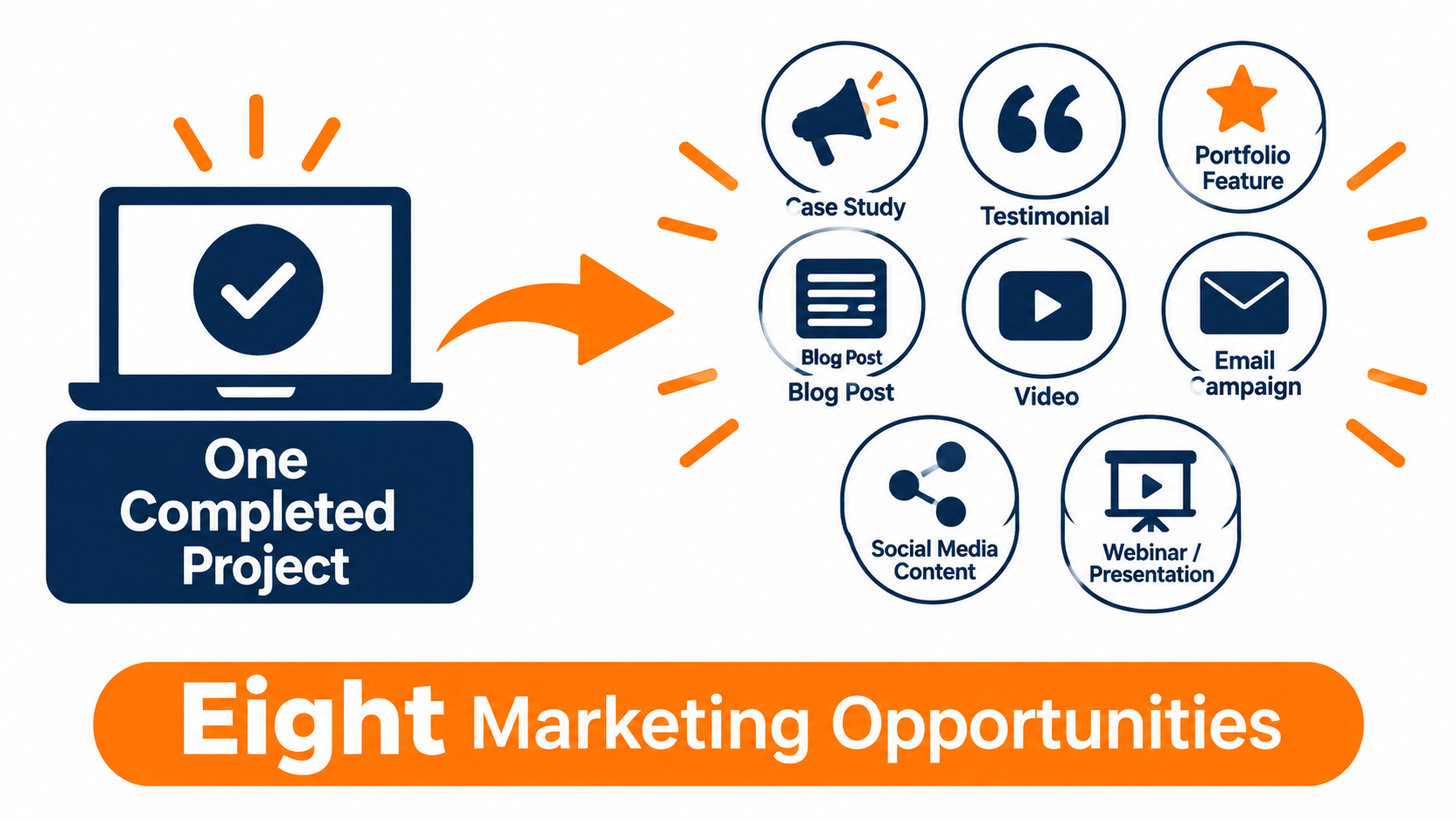
One job can provide enough material for several weeks of marketing.
You are not creating eight unrelated pieces of content.
You are distributing the same genuine business experience in formats that suit different customers and platforms.
Step 1: Photograph the work
Take photographs before, during, and after the project.
Show the details that matter.
For example:
The original condition.
The problem that needed attention.
The materials selected.
The work being performed.
The completed project.
Use real photographs whenever possible.
Step 2: Record the story
Ask the person who completed the work five questions:
What did the customer want?
What problem did we discover?
What solution did we recommend?
Why did we select that solution?
What was the final result?
These answers provide the foundation for an original article.
Step 3: Add useful details
Don't just say the project was successful.
Explain what made it successful.
Include relevant measurements, materials, time frames, costs when appropriate, and decisions made during the work.
Only include information that can be verified.
Step 4: Publish and distribute
Publish the detailed story on your website first.
Then create shorter versions for your Google Business Profile, Facebook, LinkedIn, Instagram, and other relevant channels.
The website becomes the main source of information. The other channels help customers discover it.
Step 5: Measure the results
Track:
Website visits to the project article.
Search impressions and clicks.
Phone calls.
Estimate requests.
Appointment bookings.
Qualified leads.
New customers.
Revenue generated.
This is how content becomes a measurable marketing investment rather than another publishing task.
Two Massachusetts Business Examples: What Does This Look Like in Real Life?
The following are hypothetical illustrations designed to show how the strategy works. They are not actual client case studies, and the examples do not claim verified revenue or ranking improvements.
Example 1: A Worcester landscaping company
Consider a landscaping company in Worcester, Massachusetts.
The company performs excellent work, but its website mostly contains general service descriptions.
The owner knows the company is different. The problem is that potential customers cannot see that difference online.
A data-first approach starts by examining the business.
The marketing team reviews the company's services, customer questions, website search performance, local competitors, and available project photographs.
The team then identifies a completed landscaping project that demonstrates the company's expertise.
The project involved a homeowner who wanted to improve the appearance of the front yard and address water collecting near a walkway.
The company documents:
The original yard conditions.
The drainage problem.
The homeowner's goals.
The materials selected.
The plants chosen for the space.
The installation process.
The final appearance.
Instead of publishing "We provide professional landscaping services," the company publishes a detailed project story.
It then creates a Google Business Profile update, a Facebook post, an Instagram carousel, and a short video.
Where the opportunity comes from
The business now has original information that supports several customer questions:
Who provides landscaping services in Worcester?
What landscaping materials are suitable for my property?
How can drainage problems affect landscaping?
What should I expect during a landscaping project?
What does a finished landscaping project look like?
The business can track whether this new content generates additional visits, calls, and estimate requests.
The key result is not an invented ranking increase. It is a measurable content asset that can be evaluated against real customer activity.
Example 2: A Chelmsford home remodeling company
Now consider a remodeling company in Chelmsford, Massachusetts.
The company has completed dozens of kitchen renovations, but its website has only a few photographs and a standard kitchen remodeling service page.
The business is missing an opportunity.
A homeowner searching for a kitchen contractor wants to understand what working with the company is like.
They want to know:
How does the company plan a renovation?
What materials are available?
How are design decisions made?
What happens if an unexpected issue appears?
How does the company protect the home during construction?
The company selects a completed project and documents the process.
The article explains the homeowner's original goals, the layout considerations, the materials selected, and the challenges encountered.
The company adds original project photographs and a short interview with the project manager.
It also creates a video explaining three decisions that helped shape the finished kitchen.
The resulting content provides useful information before a potential customer ever picks up the phone.
Where the opportunity comes from
Instead of competing only on the phrase "kitchen remodeling Chelmsford," the company has useful content that answers more specific questions.
It can now support searches related to kitchen renovation planning, cabinet selection, remodeling materials, and project expectations.
The company should measure the results through website engagement, consultation requests, qualified leads, and closed projects.
The lesson is simple:
A business does not need to invent something interesting to talk about.
It needs to recognize the value of the work it already performs.
How Does Original Content Help Local SEO and the Google Map Pack?
Local SEO is especially important for businesses that serve a specific geographic area.
When someone searches for a plumber, roofer, dentist, or contractor, Google needs to identify businesses that are relevant to that search and the person's location.
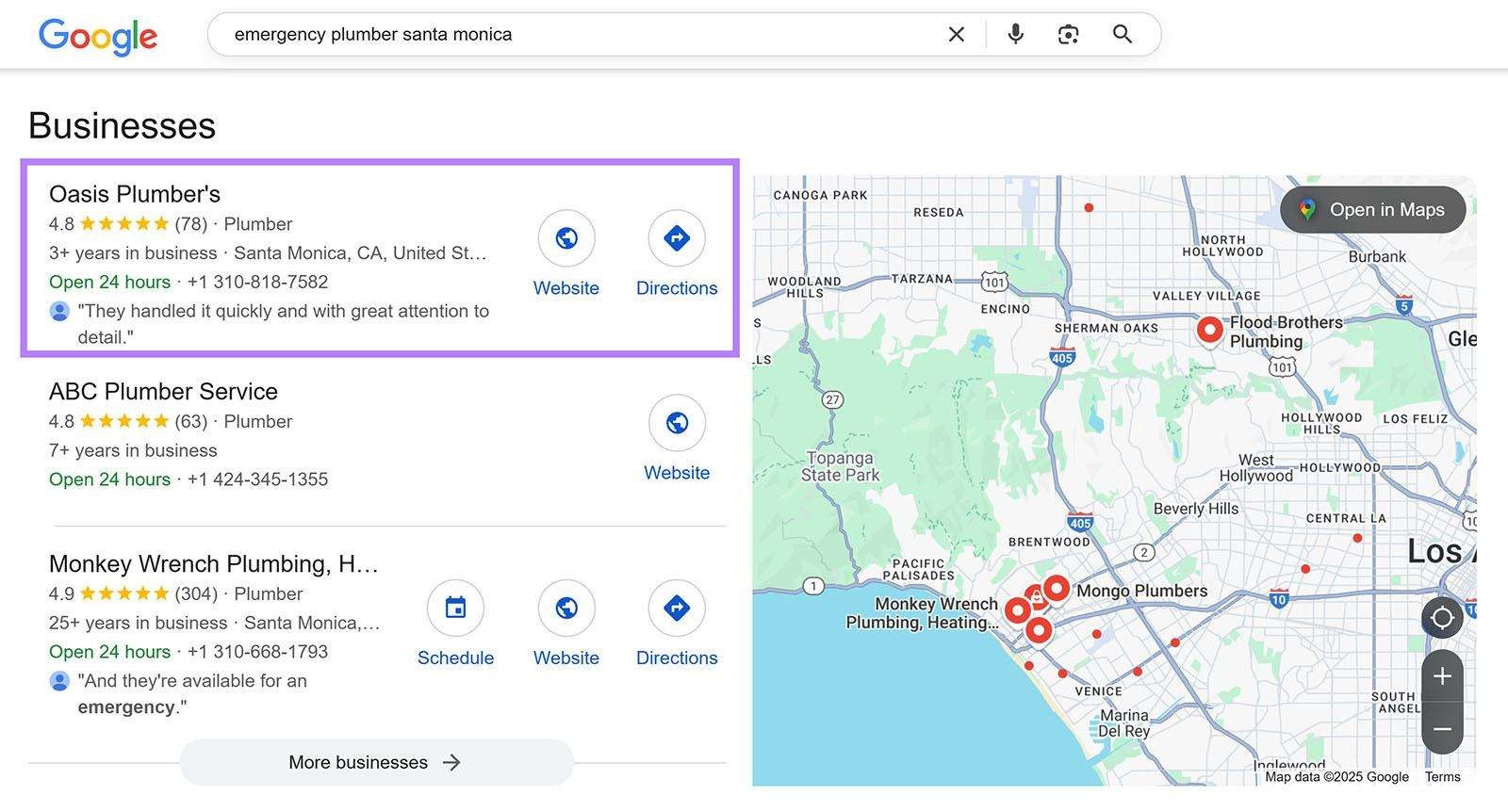
Google explains that local results are primarily based on three factors:
Relevance: How well the business matches what someone searches for.
Distance: How far the business is from the searcher or location specified.
Prominence: How well-known the business is, based on information Google has about it.
Google also identifies reviews, links, and other information across the web as factors associated with prominence.
Why local project stories matter
Suppose you own an HVAC company serving Lowell, Chelmsford, Dracut, and surrounding Massachusetts communities.
You complete an installation in Chelmsford.
A useful project article could explain:
The type of property.
The heating or cooling problem.
The equipment selected.
The installation considerations.
The work performed.
The final verified outcome.
This provides context about your actual services and the community you serve.
It is much more useful than creating ten nearly identical pages that simply replace the city name.
However, there is an important distinction.
Publishing a Google Business Profile post does not guarantee a higher Map Pack position. Google does not identify ordinary post frequency as a standalone local ranking factor.
The value of these posts is that they help customers see your work, understand your services, and take action.
Your broader local visibility strategy should include:
An accurate and complete Google Business Profile.
Correct business categories and services.
Real project photographs.
Genuine customer reviews.
Relevant website content.
Consistent business information.
Quality local links and mentions.
Accurate Bing Places information.
Make every community page useful
If your business serves multiple cities, don't simply create identical location pages.
Give each page a reason to exist.
Include actual projects, service information, customer questions, local service details, and relevant photographs.
A business serving ten towns should be able to explain how it serves those communities without pretending to have a physical office in every town.
That is a much stronger approach to local marketing.
Get Cited by AI (ChatGPT, Gemini, and Grok).
Traditional Google search is only part of the opportunity.
Customers are also asking AI-powered tools questions such as:
Who is the best roofer near me?
Which landscaping company serves my area?
Who should I hire for a kitchen renovation?
What is the difference between these two contractors?
Which local company has experience with this type of project?
These questions create a new opportunity for businesses to become recognized sources of information.
But there is something important to understand.
AI visibility is not achieved by simply putting the words ChatGPT, Gemini, or Grok into your website.
AI systems need information they can understand, evaluate, and connect to the correct business.
How AI systems can understand your business
Think of your website as the main information source about your company.
It should clearly explain:
Your legal or established business name.
Your services.
The locations you serve.
Your experience and expertise.
Your products and solutions.
Your contact information.
Your customer results.
Your unique selling points.
This is what we mean by establishing a business Source of Truth.
A Source of Truth is the primary, accurate, maintained collection of information that represents a company across its website, business profiles, directories, social platforms, and connected systems.
When these sources contain conflicting information, customers and automated systems may have difficulty determining which information is correct.
That is why consistency matters.
Why project stories help AI understand your expertise
Consider two websites.
Website A says:
"We are a professional roofing company providing quality roofing services."
Website B explains:
"We provide residential roof replacement services in Massachusetts. Our projects include asphalt shingle replacement, roof inspections, flashing repairs, and ventilation improvements. Each project is documented with photographs and an explanation of the work performed."
Website B provides more specific information.
It helps a reader understand what the company does.
It also provides more factual context that can be interpreted by search and AI systems.
Google's own AI search documentation says its existing SEO fundamentals remain important for AI Overviews and AI Mode. Pages must be indexed and eligible to appear in Google Search. Google does not require special AI markup or a separate AI optimization process.
Five ways to make your content easier for AI to understand
1. Start with direct answers.
If your article explains a service, define that service immediately.
Avoid long introductions that hide the answer.
2. Use clear headings.
Write headings that explain what the next section answers.
For example:
"How Much Does a Roof Replacement Cost?"
is more useful than:
"Our Roofing Expertise."
3. Include specific facts.
Use real materials, service locations, project details, dates, and verified results.
4. Make every important section understandable on its own.
An AI system may use a section of an article without relying on every paragraph that came before it.
Make important definitions and explanations clear enough to stand independently.
5. Connect your content to your Source of Truth.
Your website, business profiles, and public business information should agree about what your company does.
The three content anchors that improve AI readability
Anchor 1
Clean definition blocks
Write approximately 40 words that explain the subject directly. Avoid vague pronouns and unnecessary introductory language.
Anchor 2
Comparative tables
Use clear comparisons to explain services, materials, methods, and differences between available solutions.
Anchor 3
Counterfactual rules
Explain when a service is unnecessary, unsuitable, or not the best choice. Include the conditions that would change the recommendation.
These are editorial techniques, not a secret Google ranking formula. Their purpose is to make information easier for people and automated systems to interpret.
The Shortcut: Four Done-For-You Growth Systems From Digital Marketing All
Here is where many business owners get stuck.
They understand the importance of original content, better websites, local search, and AI visibility.
But they don't have the time or staff to manage everything.
Running a business already takes enough time.
You need a marketing system that helps you attract customers, turn interest into leads, and measure the return on your investment.
That's where Digital Marketing All comes in.
Here are four ways we help businesses turn marketing opportunities into measurable growth.
1. Growbotik — Your Revenue Growth Plan
Stop guessing how much marketing you need.
Growbotik helps businesses build a revenue growth plan around the number of additional customers they want each month.
We identify the marketing investment required, show what it could cost to achieve the target, and execute the plan. We then review performance and adjust the plan each month to work toward the desired customer growth.
2. Always On AI — Capture More Opportunities
Your marketing should not stop working when your office closes.
Always On AI uses specialized AI Agents to answer calls, engage website visitors, qualify leads, follow up, and help book appointments.
The goal is to prevent missed opportunities and improve the speed of customer response.
Your customers are not looking in just one place.
This service focuses on building a stronger business presence across search engines, directories, social platforms, and AI-powered discovery channels.
The objective is to improve the consistency and discoverability of your business information.
Don't have a website? Is your current website outdated?
We are offering free basic website designs to help qualifying businesses establish or improve their online presence.
A website should do more than look attractive. It should explain what you offer, establish trust, answer questions, and convert visitors into leads.
The important thing is that these services can work together.
You can attract attention with original content, improve your online visibility, capture incoming leads, and track whether your marketing investment is generating new business.
That is a much better approach than paying for marketing activities without knowing what they accomplish.
How Should Businesses Create a Content Strategy Around Real Projects?
A business doesn't need to publish a new article every day.
It needs a repeatable process.
Here is the content system we recommend.
Build a weekly project documentation routine
Set aside time each week to collect information from completed jobs.
Ask employees and project managers to share:
One interesting project.
One customer question.
One problem they solved.
One photograph or video.
One lesson learned.
This information becomes your content inventory.
Create content around customer questions
Think about the questions customers ask before hiring you.
A roofing company might hear:
How long does a roof replacement take?
What happens if damaged wood is discovered?
Which roofing materials last the longest?
How do I know whether I need a repair or replacement?
Each question can become an article, video, or social post.
The best content answers questions that customers actually ask.
Use a simple content calendar
Day |
Content activity |
|---|---|
Monday |
Collect project photographs and information |
Tuesday |
Create a website project article |
Wednesday |
Publish a Google Business Profile update |
Thursday |
Share a customer education post |
Friday |
Publish a short video or project walkthrough |
This is an example schedule, not a required Google publishing frequency.
The right schedule depends on your resources and the quality of the material you can produce.
Give every piece of content a business purpose
Before publishing, ask:
Who is this content intended to help?
What question does it answer?
What makes the information original?
What action should the reader take?
How will we measure its performance?
If you cannot answer these questions, the content may need more work.
What Should a Business Measure to Know Whether Its Content Is Working?
This is where marketing strategy meets accounting.
Getting likes and impressions can feel good, but those numbers do not automatically mean your business is growing.
A business should connect content performance to actual customer activity.
Consider these measurements.
Measurement |
What it tells you |
|---|---|
Search impressions |
How often pages appear in search |
Organic clicks |
How many people visit from search |
Google Business Profile calls |
Whether people contact the business |
Website conversion rate |
How well traffic becomes leads |
Qualified leads |
Whether inquiries match your target customer |
Appointments |
Whether prospects take the next step |
Closed customers |
Whether leads become paying clients |
Cost per acquisition |
How much it costs to gain a customer |
Revenue attributed to marketing |
Financial return from the campaign |
Understand the difference between traffic and revenue
Let's say a company publishes five new project articles.
Traffic increases, but phone calls do not.
That does not necessarily mean the articles are failures.
The next step is to investigate.
Are the articles attracting the wrong audience?
Are visitors finding the information they need?
Is the phone number easy to locate?
Does the website provide a clear next step?
Are calls being answered?
This is why marketing cannot stop at publishing.
The entire customer journey matters.
Calculate your content return on investment
A simple way to measure content ROI is:
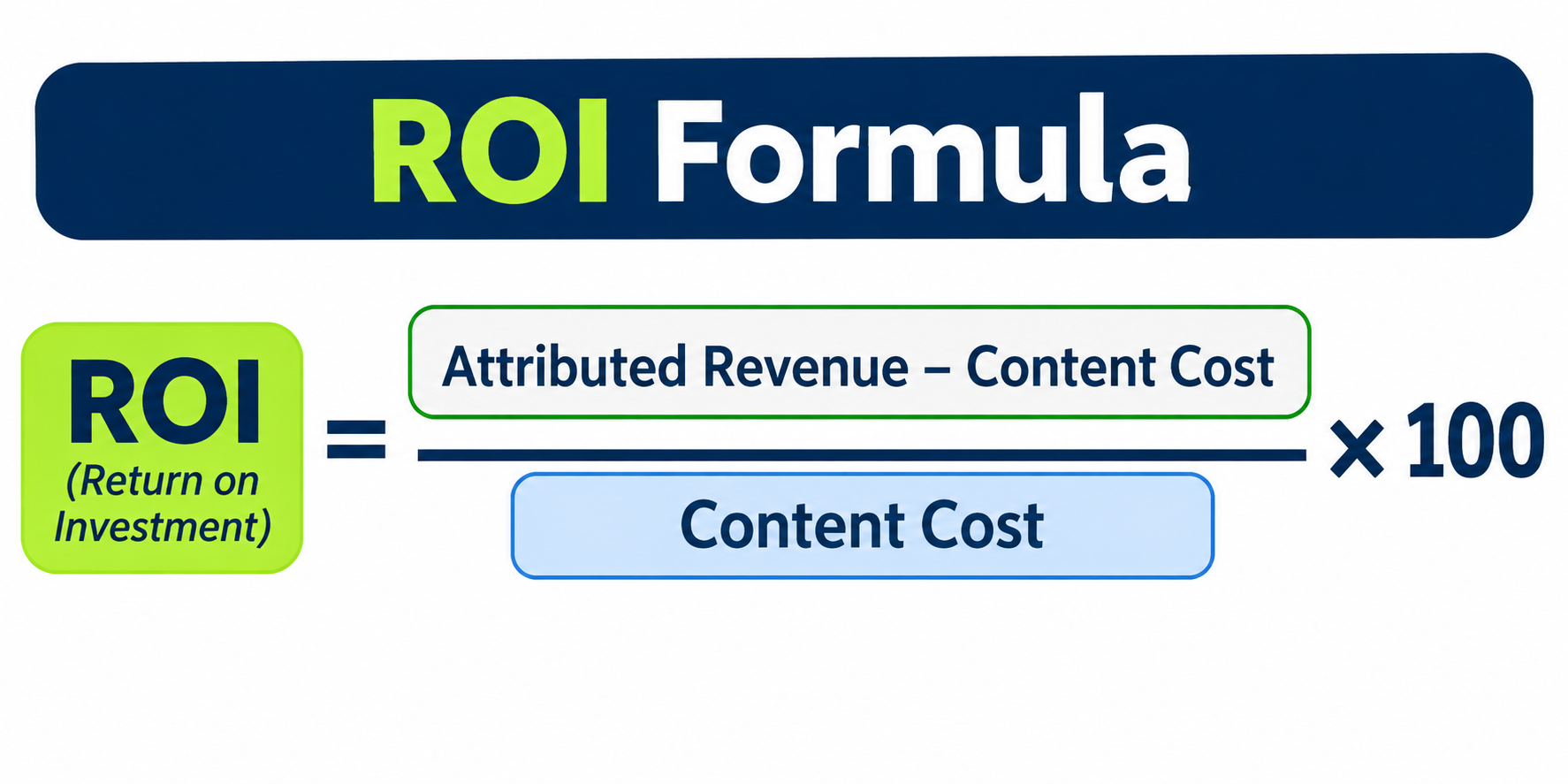
For example, suppose a business spends $1,000 creating and distributing content.
If the business can reliably attribute $4,000 in gross profit to customers generated by that campaign, the ROI calculation is:
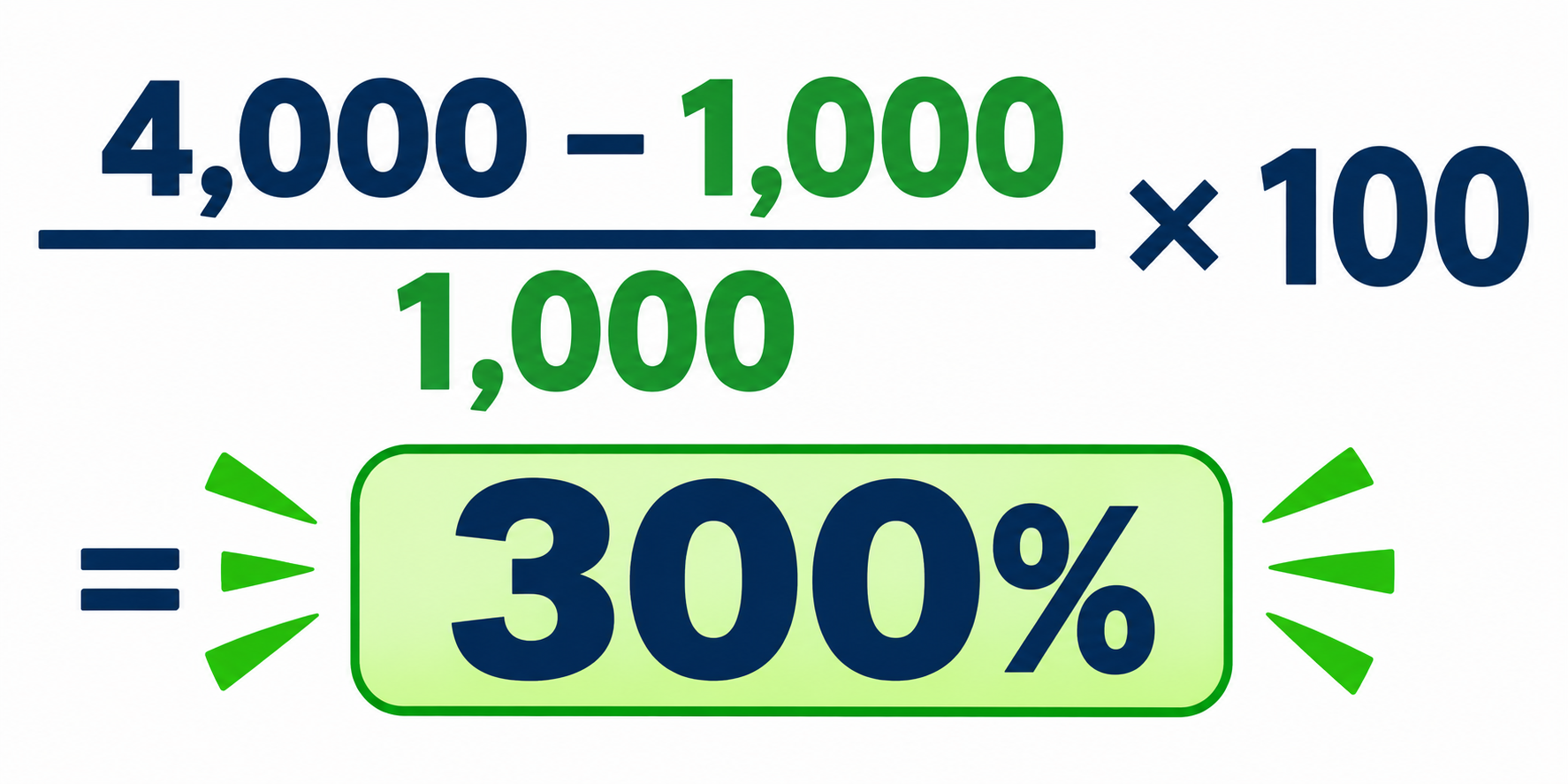
This is an illustrative calculation, not a claim about an actual client campaign.
Use consistent attribution rules and account for the full cost of producing and distributing content.
How Do You Protect Your Business Content From Becoming Another Generic AI Article?
AI is a useful marketing tool.
It can help organize information, write drafts, create content outlines, and turn project notes into different formats.
But there is a major difference between using AI to communicate real experience and using AI to invent experience.
Google's guidance on generative AI content emphasizes accuracy, quality, relevance, and human fact-checking. AI-generated content is not automatically prohibited, but using automation to produce large amounts of unoriginal content primarily to manipulate search rankings can violate Google's spam policies.
Here is the process we recommend.
Give AI real source material
Start with information from your business.
Provide:
Project notes.
Customer-approved photographs.
Interview transcripts.
Service information.
Verified measurements.
Material specifications.
Customer questions.
Actual project outcomes.
AI can then help organize this information.
Require human review
Someone familiar with the work should review every important detail.
Check names, dates, measurements, materials, claims, and technical explanations.
Never let AI invent a customer testimonial or pretend a fictional project is real.
Maintain one Source of Truth
Your website should be the primary reference for your business information.
Keep your business name, services, locations, contact details, and company descriptions consistent across important platforms.
Update information when something changes.
Publish content that reflects your actual expertise
An AI tool can help you write about roofing.
But it cannot truthfully claim that your company completed a particular roof installation unless you provide the verified details.
The value comes from combining AI's ability to organize information with the knowledge of people who actually perform the work.
How Can You Tell Whether Your Business Content Is Ready for Google and AI Search?
Use this checklist before publishing an important article.
Does the article answer a real customer question?
Does it have a clear title?
Does the introduction explain the subject?
Is there a direct definition?
Does it include original information?
Does it demonstrate first-hand knowledge?
Are factual claims supported?
Are photographs authentic and authorized?
Does it explain the process or solution?
Does it include relevant local information?
Are related services linked?
Does the page have an appropriate title and meta description?
Is the page mobile-friendly?
Can search engines crawl and index it?
Does its structured data match the visible page?
Is there a clear customer action?
Can the business measure the results?
If you cannot check most of these boxes, improve the content before publishing.
Frequently Asked Questions
1. What type of content does Google want businesses to publish?
Google encourages original, accurate, helpful content that demonstrates expertise and provides value to readers. Businesses should publish real project stories, customer education, original photographs, detailed service explanations, and information based on their actual experience.
2. Does original content help Google rankings?
Original content can support search visibility because Google encourages useful, original information. However, originality alone does not guarantee higher rankings. Technical SEO, relevance, page experience, competition, and other ranking systems also matter.
3. Do Google Business Profile posts improve local rankings?
Google Business Profile posts can help customers learn about services, offers, updates, and completed work. However, Google identifies relevance, distance, and prominence as its primary local ranking factors. Publishing posts does not guarantee improved Map Pack placement.
4. How often should a local business publish new content?
A business should publish on a schedule it can maintain without sacrificing quality. One detailed, useful project story each month may provide more value than daily generic posts. The right schedule depends on the business, its customers, and available resources.
5. How can a business get mentioned in ChatGPT, Gemini, and Grok?
Start with accurate business information, useful website content, clear service descriptions, original expertise, and consistent information across trusted sources. Make important pages accessible to search systems and provide clear answers to customer questions. No strategy guarantees an AI recommendation or citation.
6. Can AI write original business content?
AI can help organize and draft content using real business information. However, the business must provide accurate source material and review the final content. AI should not invent projects, customer experiences, testimonials, or business results.
7. What is the best way to turn completed projects into marketing content?
Document each project with photographs, customer goals, challenges, materials, solutions, and verified outcomes. Turn that information into a website article, Google Business Profile update, social media post, and video. Track the resulting inquiries and customers to measure performance.
Stop Telling Customers You're Good. Show Them Why.
Your business already has something your competitors cannot easily duplicate.
Your experience.
Every completed project, every difficult problem solved, every customer question answered, and every successful outcome creates an opportunity to demonstrate what makes your company different.
The businesses that learn to document and communicate that experience will have more useful information to share with potential customers across websites, search engines, social media, and AI-powered discovery platforms.
Ready to Turn Your Content Into Measurable Business Growth?
Creating content is only part of the equation. The real opportunity comes from turning that content into qualified leads, new customers, and measurable revenue.
You also need a website that converts visitors, accurate business information, a consistent presence across the places customers search, and a system that follows up when someone expresses interest.
That's the approach we believe creates better marketing and stronger business growth.
At Digital Marketing All, we help businesses build strategic digital marketing systems designed to increase visibility, attract the right audience, and turn marketing activity into real business growth.
Whether you need stronger SEO, AI search visibility, content marketing, lead generation, or a comprehensive digital marketing strategy, we can help you identify the opportunities and build a plan around measurable results.
We don't believe in spending money just to make marketing reports look impressive.
We believe in building a plan around the customers you want, measuring the results, and making adjustments based on what the numbers tell us.
Your competitors are already marketing their businesses. The question is whether customers can see what makes yours different.
Stop guessing whether your marketing is working. Start measuring what it produces.
Ready to discover what's possible for your business?
Book a Call with Digital Marketing All and let's talk about turning your marketing investment into measurable growth.



Write A Comment