







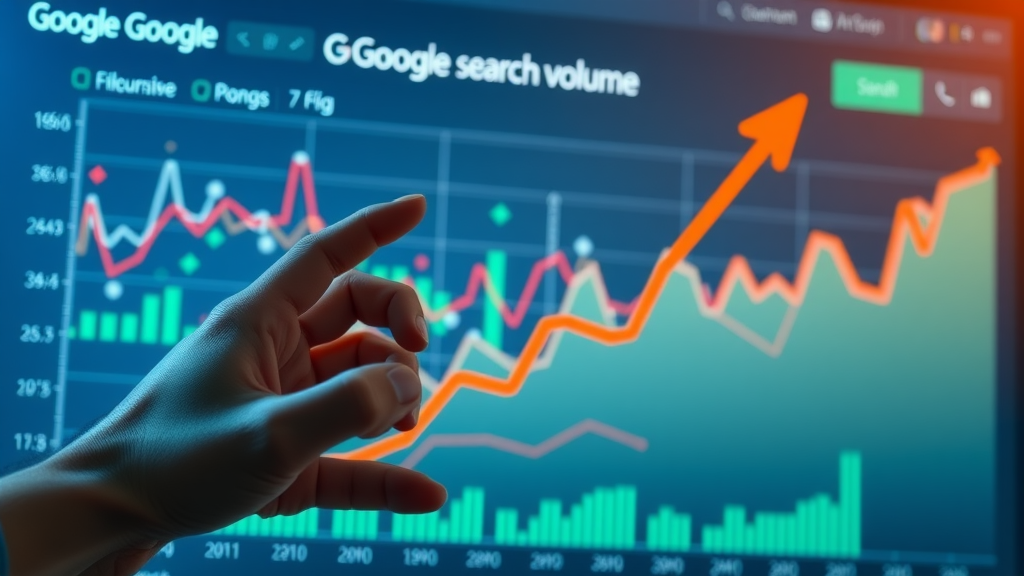
Did you know that daily Google searches have surged from 8.5 billion to 13.7 billion, creating over 5 trillion annual searches? This unprecedented growth is driven by Google's integration of generative AI and AI overview technologies that deliver curated, authoritative search results beyond traditional links. For marketers, understanding Google AI overviews and the evolving search generative experience is essential for securing visibility and thriving in today’s competitive search labs environment. In this comprehensive guide, we unwrap how these AI overviews operate, why they matter, and how you can ensure your brand is part of the conversation when customers are ready to decide.
Startling Growth in Google Search and the Rise of AI Overviews
The digital landscape is witnessing a remarkable transformation. Google’s search volume has skyrocketed, not because more people came online, but because users are searching more frequently with sophisticated, question-based queries. According to Neil Patel, of NP Digital, "Google is no longer just a list of links. It's a curated answer engine pulling from content the algorithm trusts." This shift demands that marketers rethink their strategies—from focusing solely on rankings to becoming trusted sources within AI-generated summaries.
The surge in Google search volume is complemented by Google’s adoption of generative AI that synthesizes content into concise AI overviews directly within search results. This means brands are now competing to be cited, not just to appear on page one. Visibility in Google AI overviews places a company directly in front of consumers during critical decision-making moments, redefining engagement within the search generative experience.

Breaking Down AI Overview: Types of Google Search and Their Impact
|
|
|
Google Search Types & AI Overview Appearance Rates |
|
Search Type |
Percentage of Total Search Volume |
AI Overview Appearance Rate |
|---|---|---|
|
Informational (e.g., "How to optimize SEO") |
~50% |
45.9% |
|
Commercial (e.g., "Best CRM for agencies") |
14.8% |
17.8% |
|
Navigational (e.g., "Facebook login") |
34.6% |
1.5% |
|
Transactional (e.g., "Buy headphones online") |
8% |
6.1% |
This data reveals an essential insight: Google AI overviews predominantly appear in queries where user intent is high, specifically in commercial and transactional searches. These are the moments when consumers research products or services and are most poised to make buying decisions. Unfortunately, brands absent from these AI summaries miss the critical “decision moment” that can drive conversions. Hence, marketers must prioritize appearing in AI Overviews to remain relevant and competitive.
To further enhance your brand’s presence in these high-intent search moments, consider leveraging advanced content strategies such as creating compelling link bait assets that naturally attract citations and boost your authority within Google’s AI-driven ecosystem.
Why AI Overviews Matter for Commercial and Transactional Searches
AI overviews directly impact the customer journey in high-value searches. Since these summaries synthesize key information, they often become the primary source consumers trust before making a purchase. Neil Patel emphasizes that losing visibility in these AI-powered answers means losing the chance to influence prospective buyers at the exact moment they are comparing options or finalizing decisions. Thus, for commercial and transactional intent queries, securing your brand’s mention within Google AI overviews can significantly boost brand trust, discovery, and ultimately, sales.
Understanding Google's AI Mode: The Next Evolution Beyond AI Overviews
Following AI overviews, Google has launched AI mode—an even more powerful evolution of search technology. Unlike the snapshot answers featured in AI overviews, AI mode replaces traditional search results with interactive, conversational AI experiences that deeply analyze queries through numerous hidden sub-searches. Neil Patel explains, "AI mode simulates the behavior of a professional web surfer, piecing together information step by step to provide a fully researched recommendation."
This comprehensive processing leverages a technique called query fanout, where the initial user query triggers multiple subqueries, aggregating and synthesizing information into a singular, authoritative answer. For marketers, this presents both opportunities and challenges—gaining inclusion in AI mode’s nuanced answers requires semantic understanding and content depth far beyond traditional keyword ranking.

Challenges Marketers Face with AI Mode and Semantic Positioning
One major challenge with AI mode is its opacity. Unlike traditional SEO metrics and rankings that marketers track, AI mode’s answers are formed behind the scenes from multiple hidden queries—none of which are visible or directly attributable. This means you cannot simply target a single keyword and expect visibility.
Instead, success depends on semantic positioning . This approach involves optimizing your brand as a trusted source across related topics and concepts, encompassing the entire thought process behind the consumer’s inquiry. Effectively, marketers must train Google’s AI to recognize their content as authoritative within the broader semantic field—not just isolated keywords. Those who adapt quickly will secure coveted AI citations, while others risk irrelevance despite good rankings.
The New Role of SEO: From Traffic Generation to Brand Discovery
SEO has evolved beyond generating clicks and page views. Today, it is fundamentally about brand discovery and equity built through mentions in AI-generated content. Neil Patel shares that 90% of consumers first hear about a company through organic results, yet only 5% purchase immediately. The rest engage later via email, social media, and advertising, influenced by consistent brand recognition.
Google’s AI treats brand mentions in AI overviews much like a news anchor citing trusted sources, enhancing brand authority within search results. When your brand is cited in an AI overview or mode, it gains credible visibility and long-term mindshare without necessarily earning an immediate click. This subtle but powerful form of brand exposure acts like prime advertising space—boosting recognition and trust over time, a vital asset in today’s competitive marketplace.

Building Long-Term Brand Equity Through AI Citations
The impact of being cited in Google's AI-powered responses goes beyond immediate traffic. It creates multi-channel brand flow, strengthening your presence across email, social media, paid ads, and word-of-mouth referrals. Marketers who embrace this paradigm shift position their brands as trusted industry authorities, building durable relationships that influence purchasing behavior over the long term. As Neil Patel asserts, brands cited by Google's AI acquire “brand memory” akin to sponsorship logos seen repeatedly in high-profile venues—instilling subconscious trust and recognition that pays dividends in competitive markets.
Step-by-Step Guide to Reverse Engineering Google's AI for Brand Visibility
-
Enter competitor domain in UberSuggest
-
Analyze top SEO pages and traffic-driving keywords
-
Identify keyword gaps between your site and competitors
-
Develop content targeting proven high-value topics

This process is crucial for marketers aiming to penetrate Google’s AI ecosystem. By identifying keywords that competitors rank for but you don’t, you uncover validated opportunities that the AI already values. Strategically creating superior content optimized for these terms positions your brand to be trusted and cited in AI-generated summaries and responses. This data-driven approach supersedes traditional guesswork, making optimization efficient and effective in the AI era.
Creating Content That Gets Cited by Google's AI Overviews
-
Incorporate videos summarizing key points
-
Add diagrams to simplify complex concepts
-
Use infographics for easy data scanning
-
Pair content with keyword gap insights for strategic targeting

Google's AI increasingly favors multimedia-rich content in AI overviews that enriches the user experience and boosts visibility in search generative experiences. Rather than relying solely on text, brands should integrate video summaries, clear diagrams, and compelling infographics that enable AI to easily interpret and trust the content. This layered approach aligns with neural models’ preferences—faster content consumption combined with clear data representation makes your pages more visible to Google's AI. Coupled with keyword gap targeting, this strategy creates a powerful blueprint for becoming a trusted source featured in AI overviews.
Common Misconceptions About Google AI Overviews and SEO
Many marketers mistakenly believe Google AI overviews dominate all search results and threaten traditional SEO, but they actually enhance brand discovery within search labs. In reality, AI overviews appear selectively, primarily during high-intent moments like commercial research, and function as gateways to trusted content. Another common myth is that rankings alone guarantee visibility; however, in the evolving AI environment, semantic relevance and brand authority determine inclusion in AI responses.
Moreover, Google's AI is not a competitor but an amplifier—brands cited by AI often see increased recognition and downstream conversions across channels. Recognizing these misconceptions allows marketers to adjust strategies and leverage AI overviews as powerful assets instead of threats.
People Also Ask: Key Questions About Google AI Overviews
-
Why does Google keep giving me AI Overviews? Because AI overviews provide concise, trustworthy answers for queries with high user intent to enhance usability.
-
Should I trust Google AI overviews? Yes, Google’s AI relies on content it deems credible and authoritative, improving answer quality continuously.
-
What triggers Google AI overview? Queries with strong intent to research, compare, or make decisions often trigger AI overviews.
-
What does Google AI do? Google AI synthesizes information from numerous trusted sources to present users with clear, summarized answers.
Key Takeaways: Mastering Google AI Overviews for Marketing Success
-
Google AI overviews appear most where user intent is highest, especially in commercial and transactional searches.
-
AI mode uses complex query fanout to synthesize answers, requiring semantic positioning for visibility.
-
SEO now drives brand discovery and long-term equity through AI citations, not just clicks.
-
Reverse engineering competitor content and filling keyword gaps is essential to get cited.
-
Multimedia-rich content significantly increases chances of being selected by Google's AI.

Conclusion: Embracing the Future of SEO with Google AI Overviews
Google’s AI overviews and AI mode transform the Google search landscape from simple keyword competition to a complex generative AI ecosystem where being cited by AI is paramount. Marketers who embrace this shift by reverse engineering trusted sources, focusing on semantic relevance, and enriching content with multimedia will secure long-term visibility and brand authority. As Neil Patel says, this is an opportunity to build “brand memory” that resonates across all marketing channels, turning search into a powerful discovery engine rather than just a traffic source.
Ignoring these changes means risking invisibility exactly when buyers are making critical decisions. The time to adapt and thrive with Google AI overviews is now—position your brand as a trusted AI source to own the future of search marketing.
If you’re ready to take your AI-driven search strategy to the next level, consider how broader optimization tactics can amplify your results. For example, mastering your Google Business Profile can further elevate your brand’s authority and local visibility, complementing your efforts in AI overviews. By integrating these advanced approaches, you’ll not only secure prime digital real estate but also build a resilient brand presence that stands out in both AI-powered and traditional search environments. Explore how these strategies work together to future-proof your marketing and unlock new growth opportunities in the evolving landscape of search.
Watch Next: Leveraging AI Agents to Grow Your Business Across Channels
This exclusive video complements your understanding of Google AI overviews by explaining how to use AI agents for multi-channel marketing growth, ensuring your brand stays ahead in the AI-driven digital era.
Call to Action
Ready to dominate Google’s AI-powered search results? Start today by leveraging competitor insights through UberSuggest, creating rich multimedia content, and optimizing semantically to become a trusted source cited in Google AI overviews within the evolving search generative experience . Don't miss the narrow window of opportunity—build your brand authority and visibility in this new AI era. For expert guidance and tools, visit Neil Patel's UberSuggest and start your AI optimization journey now.


Write A Comment