







Did you know that daily Google searches have surged from 8.5 billion to 13.7 billion, culminating in over 5 trillion searches annually? This staggering growth comes hand-in-hand with a transformative shift in how Google delivers search results — moving from simple link lists to sophisticated AI-driven answer engines. Understanding this seismic change and mastering keyword gap analysis is now more critical than ever for SEO success. In this comprehensive guide, we dive deep into how you can leverage competitor keyword gaps to not only improve your rankings but also become a trusted source cited directly by Google's AI. Join Neil Patel, founder of NP Digital, as he reveals practical, data-backed strategies that will position your brand at the forefront of Google's AI-powered future.

Startling Growth in Google Searches and the Rise of AI-Driven Search
-
Daily Google searches increased from 8.5 billion to 13.7 billion, exceeding 5 trillion annually
-
Question-based searches surged from 38% to 87% in just eight months
-
Google’s AI features transform search results from simple link listings to curated answer engines
Google's search landscape has undergone one of its most significant transformations ever. The volume of daily searches has exploded, driven largely by the rise of AI technologies like ChatGPT influencing user behavior. Consumers now type detailed questions, expecting immediate, comprehensive answers directly on the search page rather than scrolling through pages of links. This evolution means that traditional SEO tactics focused solely on rankings are no longer enough. Instead, brands must adapt to an environment where Google’s AI curates answers by citing trusted sources. This shift demands deeper understanding and application of keyword gap analysis to identify missed opportunities and to position your content where AI algorithms are pulling answers from.
To further refine your approach, it's essential to understand how search intent shapes the way Google’s AI selects and displays content. Exploring the nuances of search intent and its impact on rankings can help you align your keyword gap analysis with the real needs of your audience and the evolving expectations of AI-driven search.
Understanding Content Gap and Keyword Gap in the New SEO Landscape
What is Keyword Gap Analysis and Why It Matters for SEO Strategy
Neil Patel, of NP Digital, explains, "This isn't about ranking anymore. It's about becoming the source Google's AI trusts to summarize the buying journey."

Keyword gap analysis is the process of identifying keywords that your competitors rank for but your site does not. In today’s AI-powered Google search environment, this analysis is critical because it reveals the “hidden” queries that Google’s AI relies on when forming its answer snippets and overviews. Historically, SEO focused on direct keyword rankings for web pages. However, with AI models synthesizing answers from many sources, knowing where your content is missing in this interconnected keyword ecosystem allows you to target high-impact topics that correspond with Google’s trust signals.
By focusing on these gaps, you align your SEO strategy with the practical needs of AI-driven search, enhancing the likelihood your brand is cited and referenced, which drives both visibility and brand authority.
How Content Gap and Gap Analysis Reveal Opportunities in Google’s AI Ecosystem
|
|
|
|
Comparison of Search Types and AI Overview Presence |
|
Search Type |
Percentage of Total Searches |
AI Overview Presence |
Typical Usage |
|---|---|---|---|
|
Informational |
~50% |
45.9% |
Answering questions, research phase |
|
Commercial |
14.8% |
17.8% |
Product/service comparison |
|
Navigational |
34.6% |
1.5% |
Seeking specific websites |
|
Transactional |
8% |
6.1% |
Ready to purchase or convert |
This data highlights where keyword gap analysis can create competitive advantages. AI overviews are most prominent on search categories with high intent, such as informational and commercial queries — precisely where customers seek trusted guidance during their decision-making journey. By identifying gaps in your content relative to competitors’ holdings in these categories, you unlock targeted opportunities to craft content that AI is more likely to cite, thereby capturing the crucial "zero-click" visibility.
How Google's AI Mode and AI Overviews Impact Keyword Analysis and Search Results
The Mechanics of AI Mode: Query Fanout and Semantic Positioning
Neil Patel states, "AI mode collapses dozens of micro searches into one authoritative response, simulating a professional web surfer's research process."
Google’s AI mode operates by taking a single user query and autonomously executing multiple hidden subqueries behind the scenes, a process known as query fanout . For example, a complex question will trigger dozens of micro searches that gather data from various angles — considering weather, timing, location, and numerous contextual elements. Google then synthesizes this information into a coherent, authoritative answer.
Crucially, marketers cannot directly observe these underlying subqueries or track rankings for them individually, presenting a unique challenge. Instead, success depends on semantic positioning — meaning your content needs to cover the full scope of related topics comprehensively and contextually. This strategic approach improves the probability that your brand is recognized as a trusted source and cited within these AI-generated answers.

Why Traditional Keyword Analysis Needs to Evolve for AI-Driven Search
Traditional SEO relied heavily on keyword volumes, rankings, and link-building metrics focused on individual keywords or pages. But Google's AI-driven search requires a shift toward understanding how keywords interconnect and how content fits within the broader semantic landscape. Keyword gap analysis must therefore move beyond raw volume to prioritize relevance, context, and the ability to meet user intent holistically.
This means creating content that is rich, authoritative, and covers topics deeply , not just superficially ranking for isolated keywords. Integrating multimedia elements like videos, infographics, and diagrams enriches user experience, which Google’s AI rewards by increasing trust and citations.
Step-by-Step Guide to Performing Keyword Gap Analysis for AI Visibility
Using Tools Like UberSuggest to Identify Competitor Keyword Gaps
-
Enter competitor domain to analyze top SEO pages and backlinks
-
Review most visited pages and their driving keywords
-
Identify keyword gaps where competitors rank but your site does not
-
Focus on pre-validated keyword opportunities already favored by Google AI
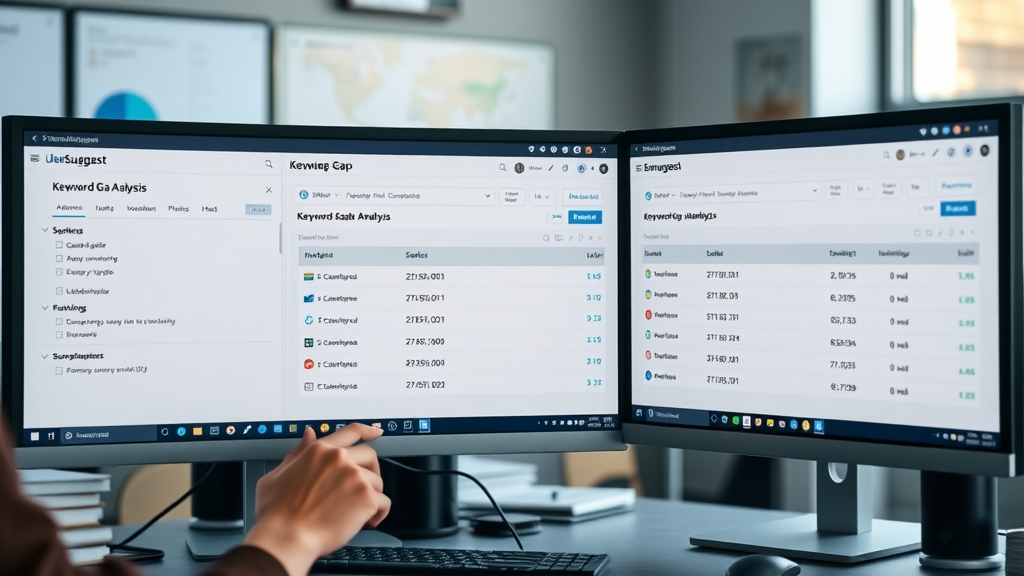
Using specialized tools like UberSuggest allows you to perform effective keyword gap analysis by comparing your site’s keyword footprint with competitors'. This reveals the exact topics and queries where your site is absent but your competitors have strong traction. These gaps represent high-opportunity areas because these keywords are already validated by Google’s algorithms and often appear within AI overviews and AI mode results.
Neil Patel advises to “build better, deeper, and more multimedia rich content around each of those terms” to leapfrog competitors in Google's AI layer.
Building Rich, Multimedia Content to Capture AI Citations

Neil Patel advises, "Google's AI rewards clarity, completeness, and credibility — not just volume. Enrich your content with videos, diagrams, and infographics to get cited."
To truly harness the power of keyword gap analysis in the AI era, it's crucial to create multimedia-rich content that appeals to both users and Google's AI. This includes embedding videos summarizing complex concepts, designing infographics to visualize data at a glance, and employing diagrams that clarify intricate ideas. Such content formats not only improve user engagement but also increase the likelihood your content is trusted and cited by Google's AI algorithms, amplifying your brand’s visibility.
Integrating Keyword Gap Analysis into Your Overall SEO Strategy
Aligning Keyword Research with Brand Authority and Semantic Positioning

The next evolution in SEO lies in integrating keyword gap analysis directly with efforts to build brand authority and semantic relevance. This alignment requires thinking beyond individual keywords to consider how content collectively establishes your brand as a go-to source within your industry niche. Strategically crafted thematic content hubs and pillar pages augmented with rich media can elevate your semantic positioning, ensuring AI recognizes your brand as the authoritative answer source.
Leveraging Competitive Analysis to Stay Ahead in Paid Search and Organic Results
|
|
|
Keyword Gap Analysis vs Traditional Keyword Research: Benefits and Limitations |
|
Aspect |
Keyword Gap Analysis |
Traditional Keyword Research |
|---|---|---|
|
Data Source |
Competitor performance & AI visibility |
Search volume & competition metrics |
|
Focus |
Uncovered opportunities & semantic relevance |
High-volume keywords |
|
AI Compatibility |
Optimizes for AI citations & answer engines |
Focuses on rankings only |
|
Limitations |
Requires ongoing competitor monitoring |
May miss emerging AI trends |
Incorporating keyword gap analysis complements and upgrades traditional approaches, allowing marketers to capture both organic and paid search advantages by focusing on AI-driven insights. This approach helps you stay ahead of competitors in a rapidly evolving search ecosystem by identifying timely opportunities that traditional methods might overlook.
Common Mistakes and Misconceptions in Keyword Gap Analysis and AI SEO
-
Focusing solely on ranking rather than AI citations
-
Ignoring multimedia content’s role in AI visibility
-
Overlooking semantic relevance and context in keyword targeting
-
Failing to monitor competitor keyword gaps regularly
Many marketers still mistakenly treat SEO as a simple race for top rankings without appreciating that Google's AI prioritizes sources it trusts to provide accurate answers. Neglecting multimedia enrichment or semantic context severely limits your chances of appearing in AI-powered search features. Plus, the dynamic nature of competitor strategies means keyword gap analysis must be an ongoing practice, not a one-time audit.
People Also Ask: Key Questions on Gap Analysis
What are the key points of gap analysis?
Gap analysis identifies the difference between current performance and desired goals by examining where content or keyword presence is lacking compared to competitors, enabling strategic focus on high-opportunity areas.
What are examples of gap analysis?
Examples include analyzing competitor keywords your site doesn’t rank for, content topics missed in your blog, or customer service practices compared to industry standards to find improvement points.
What is a gap analysis RCA?
RCA stands for Root Cause Analysis. In gap analysis, RCA explores the underlying reasons why there is a discrepancy between your current and target state, helping to diagnose and address fundamental issues.
What are the key steps of a gap analysis process?
-
Identify current performance metrics
-
Define desired goals and benchmarks
-
Compare current state versus goals to pinpoint gaps
-
Analyze root causes for gaps
-
Develop and implement strategies to close gaps
-
Monitor progress and adjust as needed
Key Takeaways: Winning Visibility with Keyword Gap Analysis in Google's AI Layer
-
Google’s AI features prioritize trusted sources over traditional rankings , redefining SEO success metrics
-
Keyword gap analysis reveals high-value opportunities for content to get cited in AI overviews and AI mode results
-
Embedding rich multimedia content enhances your chances of being included in AI-driven answers
-
Semantic positioning is crucial for establishing long-term brand authority within Google’s AI ecosystem
-
Early adoption of AI-focused SEO strategies provides a significant competitive advantage
Conclusion: Embrace Keyword Gap Analysis to Thrive in the AI-Driven Search Era
Neil Patel concludes, "The smart brands today aren’t just chasing clicks — they’re building recognition and trust through AI citations that stick across all channels."
As Google’s search architecture evolves towards AI-driven answers, marketers must pivot their focus from merely ranking keywords to becoming authoritative, trusted sources cited within AI responses. Keyword gap analysis is your roadmap to uncovering where competitors outpace you and where Google’s AI is most likely to reference content. By embracing comprehensive multimedia content, maintaining semantic relevance, and continuously analyzing competitive gaps, your brand will not only win organic visibility but also fortify long-term authority and consumer trust in the AI era.
If you’re ready to take your SEO strategy to the next level, consider how the future of search is being shaped by AI advancements and evolving user behaviors. For a comprehensive roadmap on adapting to these changes, including actionable steps and future-proof tactics, explore this in-depth guide to SearchGPT and the future of SEO . Discover how to anticipate algorithm shifts, leverage AI-powered tools, and position your brand for sustainable growth in 2025 and beyond. The next era of search is already here—equip yourself with the insights and strategies to lead, not just compete.
Call to Action
-
Call us at 207-710-1449 for all your marketing needs.
-
Let us get your business more visibility.




Write A Comment